
• Skip to primary navigation
  • Skip to main content
  • Skip to primary sidebar
  • Skip to footer
  • Home
  • Latest
  • Videos
  • Series
  • E-Newsletters
    • Fat Tail Daily
    • James Cooper’s Mining Memo
    • The Daily Reckoning Australia
  • Categories
    • Commodities
    • Macro
    • Market Analysis
    • Small Caps
    • Technology
  • Investment Guides
  • Premium Services
  • Editors
  • About
  • Contact Us
Fat Tail Daily
Subscribe
  • Home
  • Latest
  • Videos
  • E-Newsletters
  • Premium Services

ASX Commodity Trading News and Analysis - Latest Updates

Australia is one of the world’s biggest commodity producers in the world so it makes sense to wonder how one can invest in commodities and what the best commodity shares are.

Investing in commodities entails purchasing securities with exposure to an interchangeable basic good or raw material like gold, oil, natural gas, iron ore, aluminium, copper, wheat, soybeans and so on.

Commodities are interchangeable in the sense that oil extracted in Brazil will work just as fine in running one’s car as oil extracted in Russia.

One can typically invest in four commodity categories: metal, energy, livestock/meat, and agricultural.

There are also different ways one can invest in commodities.

One can own shares in companies like BHP Billiton Ltd [ASX:BHP], who produces and processes commodities such as coal, iron ore, and copper.

Or one could invest in ETFs that give you a broader exposure to a commodity segment.

Finally, one could participate in the commodities futures market. These options will be explored further below.

Australia and commodities

Australia is the largest producer of iron ore and coal in the world. It is also the third largest producer of gold, and a significant producer of ‘base metals’, including copper, zinc, and nickel.

Thanks to the construction of several liquid natural gas (LNG) plants in Queensland, Australia has also become one of the largest exporters of natural gas in the world.

This means that a large part of the Aussie market is made up of commodity, or ‘resource’, stocks.

The RBA estimates that commodities account for two-thirds of the value of Australia’s exports.

Investing in Commodities: Key Market Moves

Investing directly in a commodity by, for example, buying a barrel of oil, is not a usual or realistic investment option.

Instead, one can use financial instruments to gain indirect exposure to commodities. But before doing that, one must understand both the commodity itself and the financial instrument.

One must understand the market for the underlying commodity but also how the financial instrument will expose one to the commodity.

For instance, when contemplating crude oil as an investment, one must know the key drivers of the oil market. What themes and macro factors impact the price of oil?

One must then understand how owning shares, ETFs, or futures contracts gives one exposure to physical oil.

Commodity Investing Risks

Commodities can be risky investments because the market for them frequently depends on macro events difficult to predict or foresee.

Inflation, weather, political unrest, natural disasters, or new technologies can heavily impact commodity prices and one’s investment.

For instance, oil prices fell dramatically in the early stages of COVID-19, with the World Bank reporting oil prices have still only partially regained pre-pandemic price levels.

Commodity ETFs

One way to diversify one’s risk and retain a wide exposure to commodities is investing in an exchange traded fund.

An ETF is a managed fund that one can buy and sell on a stock exchange whose role is to track the value of a particular index or a commodity like gold.

As the ASX explains, ETFs allow investors to take a view on the market rather than on particular shares.

Commodity ETFs typically expose investors to underlying resource assets via physical backing or using a synthetic structure.

Physically backed commodity ETFs hold the underlying commodity itself.

For instance, when the BetaShares Gold Bullion ETF issues new units in the ETF, it actually buys gold bullion, which is then stored by a custodian in a vault.

However, just as it can be impractical for an individual investor to physically hold a commodity asset, in most cases it is likewise impractical and cost-inefficient for an ETF to physically hold and store commodities.

Most ETFs generally track an index instead.

These synthetic commodity ETFs aim to track a commodity index.

For instance, the BetaShares Crude Oil Index ETF tracks the performance of the S&P GSCI Crude Oil Index, which in turn is based on a crude oil futures contract traded on the NYMEX.

It is important to note that an ETF tracking an index based on a commodity futures contract may perform differently to the physical commodity itself.

This is because a commodity futures contracts may not match commodity spot prices.

If one wishes to peruse a list of ETFs, they can check out Finder’s roundup of what it thinks are the best performing ETFs in Australia and search for ETFs with a commodity focus.

Top Stories: Commodity Shares in Focus

Some of Australia’s largest and most established commodity stocks include the likes of BHP Billiton Ltd [ASX:BHP] and Rio Tinto Ltd [ASX:RIO].

For instance, BHP reported $42.9 billion in total revenue in FY20, with profit after tax of $7.9 billion.

But while BHP and Rio Tinto and are well known, there are hundreds of smaller resource companies, with many of these involved in exploration and development.

That is, these companies are not actually making any money, as they are looking for a resource or developing one they previously discovered.

This means there are huge opportunities for gains in this sector. If you can find a stock before it finds the mother lode, you could make huge returns.

But there are also significant risks. Many companies spend millions looking for a valuable resource — one which they may never find.

One must also contend with the cyclical nature of commodities and their investment proxies.

For instance, lithium prices shot up in 2018 before plummeting and remaining moribund until late 2020 when demand for electric vehicles picked up again.

Coming out of a recession and into a reinvigorated economy, cyclical commodities can flourish. We’ve seen this with record highs for copper and iron ore in 2021.

In a reenergised economy, demand for steel or chemicals or oil goes up. But when economic tailwinds turn into headwinds, cyclicals can suffer.

And that is something investors must keep in mind when contemplating commodity investments.

Gold’s Role In Times of Chaos

Gold bounced earlier this week as the world reeled from the shocking news of attacks perpetrated against Israel by Hamas militants. It’s uncertain to what extent this conflict will escalate although markets are now behaving in risk-off mode, seeking refuge in US dollars and gold. Could this lead to gold breaking its recent bearish trend, providing relief for gold investors? Find out more about what really drives the price of gold to rally…there’s more to it than threats of war.

By Brian Chu, Wednesday, 11 October 2023

Reliance Worldwide share price rise

Rise of the Asian Urbanite Fires This Commodity

2023 just keeps delivering surprise after surprise. Unfortunately, there haven’t been too many positive ones for us investors. Here’s a small glimmer. Did you know the price of iron ore is up 20% since May? That’s a strong signal that the Chinese steel sector is more robust than most presume.

By Callum Newman, Wednesday, 11 October 2023

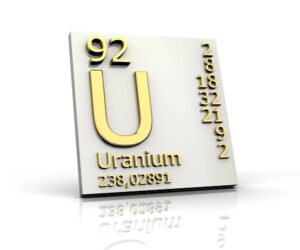
What’s In Store in the Near-Term for the Mining Sector? Don’t Look Past Crude Oil and Uranium!

A combination of high interest rates and a rallying price of oil has stifled economic activity and productivity. This has led to significant hardships worldwide at all levels of society. Last week saw the price of crude oil drop sharply, which may be signs that the rally has ended. Could it provide the much-needed relief to our global economy and therefore lead to a new era of growth? And what about the revival of nuclear energy? Could that provide another path to breaking this economic deadlock? How can you position yourself in the mining sector to exploit the possible outcomes? Read on to find out!

By Brian Chu, Monday, 09 October 2023

Australia's Superpower - Investing in Mining and Rare Earths

Three Reasons Why Investors Should ‘Discount’ Asteroid Mining and Prepare to Invest

It’s easy to dismiss the idea of mining asteroids…for all the wrong reasons. But what if we are on the cusp of a space economy finally proving such ventures profitable…for investors?

By Nick Hubble, Saturday, 07 October 2023

How Real Assets Can Protect You in an Upcoming Zombie Global Economy

The Eerie Echoes of the Fall of Rome

The biggest circus that’s happening is in the global political arena. But don’t get these lying politicians, broken promises, scandals and intrigues mesmerise you when the most important thing to your own well-being is under serious threat. These things are happening while the global economy crumbles under the sheer weight of debt and inflation. In today’s article, I’ll show you a neat yet little-known angle to understanding where the economy is heading, and what you can do to protect yourself from its devastating effects.

By Brian Chu, Thursday, 05 October 2023

Sneak Peek: Brian’s ‘Three-Arrow Strategy’ For Speculative Gold Stocks

Today’s article gives you a look at the kinds of opportunities you’ll be presented with in Brian Chu’s Australian Gold Report service. Enjoy this excerpt from Brian’s Speculative Gold Stocks report, which outlines a long-term investing strategy he applies to the gold stock explorer space…

By Brian Chu, Wednesday, 04 October 2023

  • « Go to Previous Page
  • Page 1
  • Interim pages omitted …
  • Page 104
  • Page 105
  • Page 106
  • Page 107
  • Page 108
  • Interim pages omitted …
  • Page 243
  • Go to Next Page »

Primary Sidebar

Commodities Categories

  • Commodities
  • Resources and Mining
  • Copper
  • Gold
  • Iron Ore
  • Lithium
  • Silver
  • Graphite
  • Rare Earths

Footer

Fat Tail Daily Logo
YouTube
Facebook
x (formally twitter)
LinkedIn

About

Investment ideas from the edge of the bell curve.

Go beyond conventional investing strategies with unique ideas and actionable opportunities. Our expert editors deliver conviction-led insights to guide your financial journey.

Quick Links

Subscribe

About

FAQ

Terms and Conditions

Financial Services Guide

Privacy Policy

Get in Touch

Contact Us

Email: support@fattail.com.au

Phone: 1300 667 481

All advice is general in nature and has not taken into account your personal circumstances. Please seek independent financial advice regarding your own situation, or if in doubt about the suitability of an investment.

The value of any investment and the income derived from it can go down as well as up. Never invest more than you can afford to lose and keep in mind the ultimate risk is that you can lose whatever you’ve invested. While useful for detecting patterns, the past is not a guide to future performance. Some figures contained in our reports are forecasts and may not be a reliable indicator of future results. Any actual or potential gains in these reports may not include taxes, brokerage commissions, or associated fees.

Fat Tail Logo

Fat Tail Daily is brought to you by the team at Fat Tail Investment Research

Copyright © 2026 Fat Tail Daily | ACN: 117 765 009 / ABN: 33 117 765 009 / ASFL: 323 988