• Skip to primary navigation
  • Skip to main content
  • Skip to primary sidebar
  • Skip to footer
  • Home
  • Latest
  • Videos
  • Series
  • E-Newsletters
    • Fat Tail Daily
    • James Cooper’s Mining Memo
    • The Daily Reckoning Australia
  • Categories
    • Commodities
    • Macro
    • Market Analysis
    • Small Caps
    • Technology
  • Investment Guides
  • Premium Services
  • Editors
  • About
  • Contact Us
Fat Tail Daily
Subscribe
  • Home
  • Latest
  • Videos
  • E-Newsletters
  • Premium Services

ASX Commodity Trading News and Analysis - Latest Updates

Australia is one of the world’s biggest commodity producers in the world so it makes sense to wonder how one can invest in commodities and what the best commodity shares are.

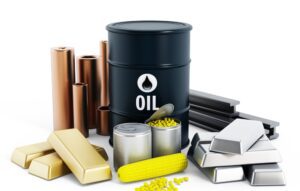
Investing in commodities entails purchasing securities with exposure to an interchangeable basic good or raw material like gold, oil, natural gas, iron ore, aluminium, copper, wheat, soybeans and so on.

Commodities are interchangeable in the sense that oil extracted in Brazil will work just as fine in running one’s car as oil extracted in Russia.

One can typically invest in four commodity categories: metal, energy, livestock/meat, and agricultural.

There are also different ways one can invest in commodities.

One can own shares in companies like BHP Billiton Ltd [ASX:BHP], who produces and processes commodities such as coal, iron ore, and copper.

Or one could invest in ETFs that give you a broader exposure to a commodity segment.

Finally, one could participate in the commodities futures market. These options will be explored further below.

Australia and commodities

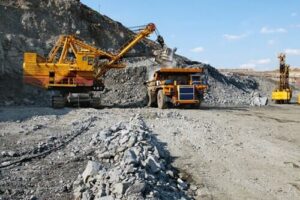
Australia is the largest producer of iron ore and coal in the world. It is also the third largest producer of gold, and a significant producer of ‘base metals’, including copper, zinc, and nickel.

Thanks to the construction of several liquid natural gas (LNG) plants in Queensland, Australia has also become one of the largest exporters of natural gas in the world.

This means that a large part of the Aussie market is made up of commodity, or ‘resource’, stocks.

The RBA estimates that commodities account for two-thirds of the value of Australia’s exports.

Investing in Commodities: Key Market Moves

Investing directly in a commodity by, for example, buying a barrel of oil, is not a usual or realistic investment option.

Instead, one can use financial instruments to gain indirect exposure to commodities. But before doing that, one must understand both the commodity itself and the financial instrument.

One must understand the market for the underlying commodity but also how the financial instrument will expose one to the commodity.

For instance, when contemplating crude oil as an investment, one must know the key drivers of the oil market. What themes and macro factors impact the price of oil?

One must then understand how owning shares, ETFs, or futures contracts gives one exposure to physical oil.

Commodity Investing Risks

Commodities can be risky investments because the market for them frequently depends on macro events difficult to predict or foresee.

Inflation, weather, political unrest, natural disasters, or new technologies can heavily impact commodity prices and one’s investment.

For instance, oil prices fell dramatically in the early stages of COVID-19, with the World Bank reporting oil prices have still only partially regained pre-pandemic price levels.

Commodity ETFs

One way to diversify one’s risk and retain a wide exposure to commodities is investing in an exchange traded fund.

An ETF is a managed fund that one can buy and sell on a stock exchange whose role is to track the value of a particular index or a commodity like gold.

As the ASX explains, ETFs allow investors to take a view on the market rather than on particular shares.

Commodity ETFs typically expose investors to underlying resource assets via physical backing or using a synthetic structure.

Physically backed commodity ETFs hold the underlying commodity itself.

For instance, when the BetaShares Gold Bullion ETF issues new units in the ETF, it actually buys gold bullion, which is then stored by a custodian in a vault.

However, just as it can be impractical for an individual investor to physically hold a commodity asset, in most cases it is likewise impractical and cost-inefficient for an ETF to physically hold and store commodities.

Most ETFs generally track an index instead.

These synthetic commodity ETFs aim to track a commodity index.

For instance, the BetaShares Crude Oil Index ETF tracks the performance of the S&P GSCI Crude Oil Index, which in turn is based on a crude oil futures contract traded on the NYMEX.

It is important to note that an ETF tracking an index based on a commodity futures contract may perform differently to the physical commodity itself.

This is because a commodity futures contracts may not match commodity spot prices.

If one wishes to peruse a list of ETFs, they can check out Finder’s roundup of what it thinks are the best performing ETFs in Australia and search for ETFs with a commodity focus.

Top Stories: Commodity Shares in Focus

Some of Australia’s largest and most established commodity stocks include the likes of BHP Billiton Ltd [ASX:BHP] and Rio Tinto Ltd [ASX:RIO].

For instance, BHP reported $42.9 billion in total revenue in FY20, with profit after tax of $7.9 billion.

But while BHP and Rio Tinto and are well known, there are hundreds of smaller resource companies, with many of these involved in exploration and development.

That is, these companies are not actually making any money, as they are looking for a resource or developing one they previously discovered.

This means there are huge opportunities for gains in this sector. If you can find a stock before it finds the mother lode, you could make huge returns.

But there are also significant risks. Many companies spend millions looking for a valuable resource — one which they may never find.

One must also contend with the cyclical nature of commodities and their investment proxies.

For instance, lithium prices shot up in 2018 before plummeting and remaining moribund until late 2020 when demand for electric vehicles picked up again.

Coming out of a recession and into a reinvigorated economy, cyclical commodities can flourish. We’ve seen this with record highs for copper and iron ore in 2021.

In a reenergised economy, demand for steel or chemicals or oil goes up. But when economic tailwinds turn into headwinds, cyclicals can suffer.

And that is something investors must keep in mind when contemplating commodity investments.

Nearing the End of the Gold Stock Lull

For the past three years, gold has steadily risen on the back of deteriorating economic and geopolitical conditions. However, those who bought gold stocks hoping to strike it rich have suffered sharp losses in some of their holdings, with very few companies delivering lasting gains over this period. Many are feeling despondent about this and may be second-guessing whether it’s been a bad strategy. I’ll cover the factors that have contributed to gold stocks underperforming gold over this period and offer hope as I see signs in recent times that the worst could be behind us. So if you’re invested in gold stocks now, be hopeful and don’t give up!

By Brian Chu, Monday, 23 October 2023

Does Upside Outweigh the Risks In the World’s Most Important Copper Producing Nation?

In today’s Fat Tail Commodities, James Cooper revisits Chile. With nationalisation remaining a key issue in the world’s most important copper producing nation, is now the time to step into this enticing province? According to James, there are mounting pressures on Chile’s government to step away from its nationalisation push. If it backs down, that could spur a surge of interest in the small number of explorers developing massive projects here. Read on to find out how James is positioning his subscribers for the potential windfalls on offer…

By James Cooper, Friday, 20 October 2023

What’s Not Priced In: 80% Off and No One Wants to Buy!

In this week’s episode of What’s Not Priced In, we speak all things commodities with James Cooper. We discuss how this cycle is different to the secular bear market experienced in commodities from 2012–16. We focus specifically on the carnage in the junior mining sector. James explains why this sector is the area speculative investors should be looking at to position for big gains in the years ahead.

By Greg Canavan, Friday, 20 October 2023

Global Elite - New World Order and Centra Banks

Loud and Clear — The Tide Turns Against the Australian Elites

14 October 2023 may go down in history as the day when the ordinary Australians turned the tables against the elite class who had neglected and even abused them. The referendum on ‘The Voice’ that claimed to help in the process of reconciliation with Aborigines and Torres Strait Islanders was soundly rejected. What the Australian people wanted was relief from hardships arising from the lockdowns and a crumbling global economy, not hundreds of millions of dollars spent creating division and opening the country to unintended consequences. With the message heard loud and clear, the elites in this country have two choices — listen and change strategy, or face the potential wrath of the majority…

By Brian Chu, Thursday, 19 October 2023

Trader’s Corner — Thinking on Your Feet — Gold Stocks

A Timely Idea for Your ‘Forever’ Portfolio

The market keeps getting rattled from big moves in US bond yields. ASX futures have us going down 1% at the open. We have the Hamas/Israel conflict threatening to send oil mooning. It’s a tough market. Does this mean you can’t make money? No! Read on…

By Callum Newman, Thursday, 19 October 2023

Navigating Capital Raisings in Junior Mining Stocks

I’ve had some of my Diggers and Drillers readers asking about capital raisings in the junior mining sector. I addressed those questions in a recent update to subscribers, and thought the content would also be of interest to Fat Tail Commodities readers. It’s all about capital raisings in the junior mining sector. Enjoy…

By James Cooper, Wednesday, 18 October 2023

  • « Go to Previous Page
  • Page 1
  • Interim pages omitted …
  • Page 102
  • Page 103
  • Page 104
  • Page 105
  • Page 106
  • Interim pages omitted …
  • Page 243
  • Go to Next Page »

Primary Sidebar

Commodities Categories

  • Commodities
  • Resources and Mining
  • Copper
  • Gold
  • Iron Ore
  • Lithium
  • Silver
  • Graphite
  • Rare Earths

Footer

Fat Tail Daily Logo
YouTube
Facebook
x (formally twitter)
LinkedIn

About

Investment ideas from the edge of the bell curve.

Go beyond conventional investing strategies with unique ideas and actionable opportunities. Our expert editors deliver conviction-led insights to guide your financial journey.

Quick Links

Subscribe

About

FAQ

Terms and Conditions

Financial Services Guide

Privacy Policy

Get in Touch

Contact Us

Email: support@fattail.com.au

Phone: 1300 667 481

All advice is general in nature and has not taken into account your personal circumstances. Please seek independent financial advice regarding your own situation, or if in doubt about the suitability of an investment.

The value of any investment and the income derived from it can go down as well as up. Never invest more than you can afford to lose and keep in mind the ultimate risk is that you can lose whatever you’ve invested. While useful for detecting patterns, the past is not a guide to future performance. Some figures contained in our reports are forecasts and may not be a reliable indicator of future results. Any actual or potential gains in these reports may not include taxes, brokerage commissions, or associated fees.

Fat Tail Logo

Fat Tail Daily is brought to you by the team at Fat Tail Investment Research

Copyright © 2026 Fat Tail Daily | ACN: 117 765 009 / ABN: 33 117 765 009 / ASFL: 323 988