



Ouch, rates are at 4.85%.
That’s the fifth rate rise this year, and the highest cash rate since 2008.
It landed on Melbourne Cup day, while the nation had a flutter on long shots.
On the ASX, the small-cap long shots have trailed the field for weeks.
The Small Ordinaries index fell 5.5% in October, a steeper drop than the ASX 200.
The Australian Financial Review reports that some of the country’s best-known small-cap fund managers are nursing heavy losses on former darlings.
The fallen angels
Take Artrya [ASX:AYA], a company using artificial intelligence to help doctors detect coronary artery disease.
Regal Partners [ASX:RPL] first bought shares at 70 cents and watched them hit a record $6.49 in July, a gain of more than ninefold. Its portfolio manager even set an internal price target of $50.
Four months on, the share price has more than halved.
Slower US revenue and a delayed US regulatory submission spooked investors, as did its cash burn, meaning it spends more than it brings in.
EchoIQ [ASX:EIQ], another heart disease AI company, ran about 500% between January and August.
It then halved in a single session in September after failing to win regulatory approval for its flagship product.
(I know the EIQ team well, I actually met them at a Perth cardiology conference):
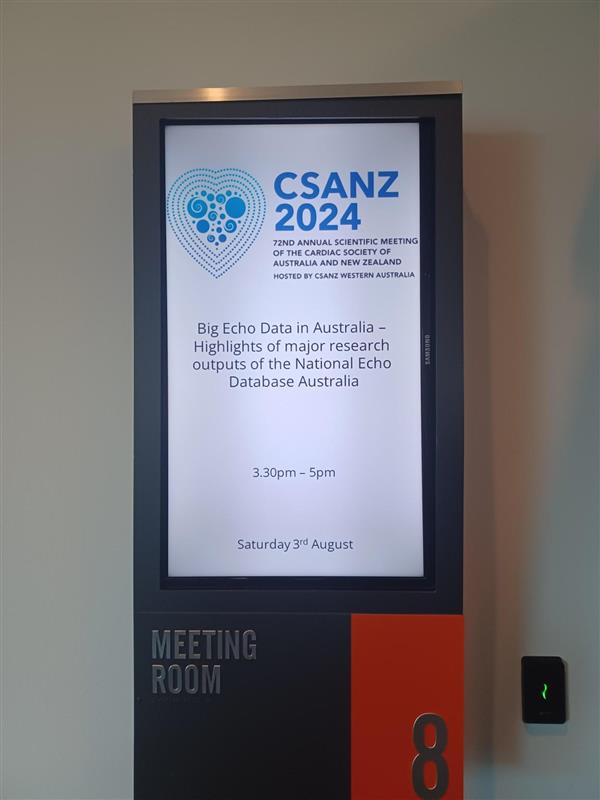
Source: Lachlann Tierney
As for the other casualties…
Rare earths developer Lindian Resources [ASX:LIN] rallied more than 1,000% from the start of 2025 to April, then more than halved on regulatory concerns about its Malawi project.
Defence technology company Elsight [ASX:ELS] has fallen about 65% since the start of October, after its revenue growth slowed in the third quarter.
Throw in IperionX [ASX:IPX] and Maas Group [ASX:MGH], which slumped after Firmus Technologies pulled its float, and it’s been a chastening few months.
Regal’s Charlie Aitken told clients, “It’s been a genuine bear market, and it hurts.”
He also apologised for stock-picking mistakes.
Unlike the Treasurer.
Thanks, Jim
The Iran war and the RBA have both played their part in this mess.
Eight months in, the war has Brent crude back above US$100 a barrel this week, feeding the inflation the RBA keeps fighting.
I’d lay a big share of the blame at the feet of Treasurer Jim Chalmers.
His May budget plans to replace the 50% capital gains tax discount from July 2027 with an inflation-linked system and a 30% minimum tax on gains.
Small-cap investors make their money mostly from capital gains, because few small companies pay meaningful dividends.
Back a small explorer and make a decent gain above inflation, and at least heaps of that now goes to the tax office.
The big super funds, meanwhile, keep their “boring company” discount.
And where does all that super money go?
Super funds are judged against the index, so much of their Australian share money flows to the slow, committee-run giants at the top of the ASX.
What a stroke of genius, Jim.
(Sarcasm aside, it’s actually kind of diabolically smart in a realpolitik way)
You’ve built a tax system that gently herds even more of Australians’ savings towards companies that already dominate the index.
That are largely owned by the unions via industry superannuation funds. That run your party. That creates a tax system…ah, you get the point.
And I’m sure the big banks are grateful too.
To be fair, Jim did find a $250 tax offset for workers.
Whatever dude.
Back to basics
My hypothesis is that Jim’s tax changes, piled on top of rising rates and the Iran war, will push small-cap investors back to basics.
I expect profitable companies with healthy cash balances to lead the small end of the market once more.
Companies that still need outside money to keep the lights on get squeezed hardest.
Raising cash at lower share prices dilutes existing investors, shrinking their slice of the company.
Regardless of what the US midterm count delivers in the coming hours, and however the Iran peace talks play out, I expect these pressures to stay with us until the next federal election.
That’s roughly 18 months away, and it’s the first real chance voters get to pass judgement on Jim’s handiwork.
Lower your sights
So I’m lowering my expectations for small caps over that stretch.
Legendary US fund manager Peter Lynch popularised the term “ten-bagger” for a stock that rises tenfold.
I expect those to be rarer for a decent while.
An 80% gain is a terrific result in this environment.
In practice, that could mean clipping winners earlier, by selling part of a position to lock in a profit and letting the rest ride.
Artrya, EchoIQ and Lindian show how quickly big paper gains can evaporate.
I remain on the hunt for companies that can do well in this environment, particularly those that pay their own way.
Jim’s game sucks.
Warm regards,
Dr. Lachlann Tierney,
Australian Small-Cap Investigator and Fat Tail Microcaps





Comments