



Today I’ve got a major bit of news to share with you about what we’ve been cooking up at Fat Tail Investment Research over the last 12 months.
Trust me, you might not look at trading ASX small caps the same way again.
But first consider this:
‘ASIC estimates about 85% of trading in Australian listed equities is now algorithmic.’
That’s not the future. That’s right now.
The machines are here.
And beating them is only going to get harder.
That’s the present environment.
But first, let’s talk about the past.
And ironically, it’s always been all about the future.
Humour me for a second as I take you on a tour of my childhood memories…
Four “where were you” memories, same idea
It was mid-May 1997, and I was 6 years old.
My father was driving us past the California Lutheran University gymnasium in Southern California, and it was a misty morning.
You might remember what happened then too.
That morning in the car, my father told me that Gary Kasparov was beaten by IBM’s Deep Blue supercomputer in a game of chess.
This is one of just four moments in my life where I can remember exactly where I was, down to roughly a 4–5 metre radius on Google Maps.
They are:
- Moore’s Law: the famous Intel founders’ predictive law for computer chip processing power (car park of AYSO soccer fields on E Janss Road, Thousand Oaks)
- Gary Kasparov losing chess to IBM’s Deep Blue (as above)
- Bitcoin’s existence: thanks to a living room chat with Henry O’Connell at my mate Stewart’s house on the Avenue in Parkville in 2010
- The launch of ChatGPT: the kitchen of my mate Leo’s house on Palermo St, South Yarra, in December of 2022
There’s a theme that runs through each of these vivid memories — they’re broadly tied together by technology breakthroughs.
But woven together, they show where my mind has been throughout my life, even in childhood.
The future.
This market isn’t a TV show…
Speaking of the future, how good was Star Trek?
Gene Roddenberry’s futuristic vision was incredible…
(even though I think it fell off after Shatner departed)
But with that said, one of the more interesting villains of the newer episodes was the Borg.
The Borg weren’t just “smart”.
They were a computer-enhanced hive mind. Plugged into everything. Learning, adapting, assimilating.
That’s a pretty useful mental picture for where markets have ended up.
Today, when you trade on the ASX, you’re not standing across from a single opponent.
You’re stepping into a network of algorithms that never sleep and operate as a kind of financial hive mind.
That means most of the volume sloshing around each day is machine-driven.
Zoom out and look at the structure.
At the top, you’ve got the ASX 200.
It’s where the big super funds, the ETFs, the quants, and the global money all crowd in.
Over the last decade or so, that index has delivered a bit over 9% per year, including dividends. Not bad for “set and forget”.
But that’s not where the truly explosive moves come from.
Further down, in the small and micro caps, you’ve got hundreds of companies under a $400 million market cap.
Many are illiquid, under‑researched, and ignored by institutions.
That’s where you still see plus 100%, 200%, even 1,000% moves when a story hits.
The catch?
Morningstar has shown that, on average, large caps have outperformed small caps in Australia over long stretches, especially once you factor in all the failed little companies that quietly disappear.
One estimate suggests more than 60% of small caps delivered negative returns in the decade to 2020.
So yes, the opportunity down there is real.
But the base rate of failure is ugly.
Now layer the “Borg” of algorithmic trading on top of that.
I know small-cap fund managers are creating locally hosted robots to target ASX small caps, right now, as we speak.
That’s the world you’re walking into when you hit “buy” on a tiny stock.
You can treat that as a reason to walk away.
Or you can treat it as a signal that
you need your own machine.
That’s where ATLAS comes in.
ATLAS is an AI‑driven trading engine built by Charlie Ormond and Paul Dichiera, designed specifically to scan the small‑cap end of the ASX for the kinds of price and volume patterns that have historically led to big follow‑through moves:
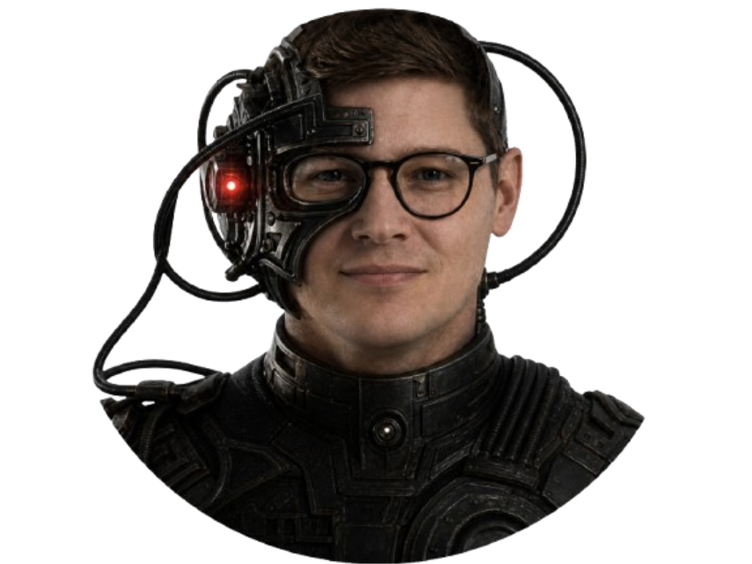
Source: Lachlann Tierney (You’re welcome, Charlie!)
[Click to open in a new window]
Like the Borg, it doesn’t get tired, it doesn’t get emotional, and it applies the same rules on a Tuesday afternoon as it does on a panicky Friday morning.
Charlie is now making ATLAS’s signals available to subscribers.
It’s not a guarantee of profits.
Small‑cap trading is volatile and high-risk. You can lose money quickly, and you should never invest more than you can afford to lose.
But if you’re already drawn to this end of the market…
If you’re already trying to find the next big winner among the smallest companies…
Then the real question is whether you want to keep doing that as a lone human against a market that’s 85% machine…
Or whether it makes sense to at least see what it looks like when the robot is on your side.
So this is it…last chance to see what happens at 5pm. I think you’ll really want to see ATLAS in action. You may never look at ASX small cap trading the same way again. Click here to register for the ATLAS demo before 5pm today.
Warm regards,

Dr. Lachlann Tierney,
Australian Small-Cap Investigator and Fat Tail Microcaps





Comments