



We’re roaring into the second half of the real estate cycle.
That means over the next few years, a lot of money will continue to pour into Australia’s property market. And this includes the financing of some mega development projects.
One that hit the press last week is a $650 million plan to refurbish a tower at the ‘Paris end’ of Collins St.
ASX-listed developer Mirvac [ASX:MGR] wants to revitalise its 1980s office at 90 Collins St to create a new ‘boutique workspace and office destination’ for the CBD.
‘The revamp of the tower would include an additional 15,000 square metres of commercial space, a new lobby to Collins St, dedicated wellness areas, a connection from Alfred Place to Pink Alley via the ground floor, which would accommodate 3500 workers.’
The project would take the building to 37 levels, towering above the neighbouring heritage buildings at 86–88 Collins St.
Doing this will claim exclusive rights to the air above the properties. Land titles will then be created for the offices, which fill the space:
‘By purchasing the air rights of 86–88 Collins St from level three and above, Mirvac said it would ensure that “no further development can occur on this historic site, assisting with the retention of this important Collins St address.”’
It’s a clever concept — but not a new one.
As I mentioned to my subscribers the other week, the idea of air rights was first conceived not from building up but building down.
In 1903, William Wilgus, a smart engineer from New York, was working to rebuild Grand Central Station and electrify the steam locomotives.
William’s light-bulb moment was moving the terminal underground.
That idea was inconceivable under steam technology.
This way, said William, developers could ‘take wealth from the air’ (i.e. the ground above) and claim the space on ‘air rights’ for themselves.
The buildings above would sit on the steel and concrete roof that covered the tracks.
The sale and lease of those buildings would create enough wealth to finance the transport system below — a form of ‘value capture’.
It took 10 years, 1 million pounds of dynamite, and the removal of almost 3 million cubic yards of rock and soil before William’s plan came to fruition. However, his ingenuity transformed Manhattan’s landscape forever.
Nowadays, developers are more likely to buy the air rights above an existing building and ‘air bank’ it (when zoning permits) to advantage their development.
The best and most famous example is Donald Trump’s monument to himself: Trump Tower.
It cost more than US$330 million to build. It’s one of the tallest residential concrete structures on Earth.
It was constructed using more than 90,000 tonnes of reinforced concrete.
|
|
| Source: BBC News |
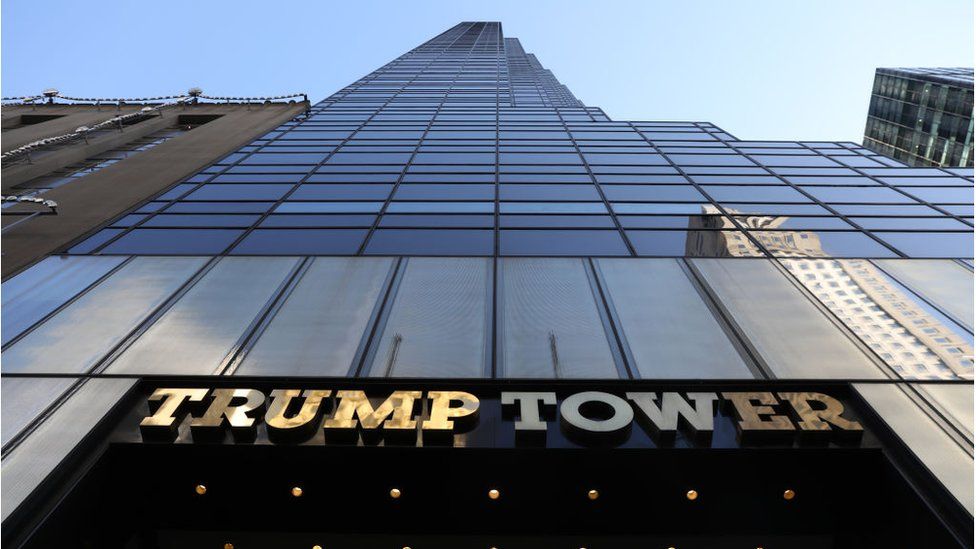
It opened in the early ’80s mid-cycle downturn as you would expect based on the ‘skyscraper curse’.
Inside is a waterfall and public garden encased in more than 200 tonnes of imported Italian marble.
The development would (and should) have made a spectacular loss.
However, Trump was smart enough to purchase the neighbouring block’s air rights.
That block was owned by the jeweller, Tiffany & Co.
The conversation is recorded in Theodore Steinberg’s book Slide Mountain: Or, The Folly of Owning Nature (1996):
‘I’m offering you five million dollars [a bargain at the time]…to let me preserve Tiffany. In return you’re selling me something — air rights — that you’d never use anyway.’
Tiffany’s air rights allowed Trump to boost the floor space in the building by 50%, by building further outwards than would have been permitted otherwise.
This increased the price of each apartment substantially.
New one-bedroom studios sold for half a million dollars upon completion (US$1.2 million in today’s terms).
Views were guaranteed for the life of the development.
Trump’s building changed the way developers looked at air rights. It triggered the 1980s construction boom on a magnitude that had never been seen before.
The history is interesting. So too is the planned date for this project.
Construction will start in 2023. That means it will be completed toward the top of the current cycle in 2026.
It will be a precarious time for the real estate industry.
We’ll be on the precipice of one of the biggest market downturns since the early 1990s.
How can I be so confident? Click here to find out!
Best wishes,
 |
Catherine Cashmore,
Editor, The Daily Reckoning Australia