




It was the kind of image that travels faster than the match report.
Ferran Torres scored the goal that won Spain the World Cup on Monday morning, Australia time. The game between Spain and Argentina was tied for 106 minutes. Argentina was looking to make history by becoming the third country to win back-to-back titles, as Italy did in 1934 and 1938, and Brazil did in 1958 and 1962. Torres shattered that dream just fourteen minutes short of the two countries having to face off with a penalty shootout.
Torres’ goal was a historic moment, in the world’s most-watched sporting event. A well-deserved victory for a man playing in the team that took the golden trophy home for the second time.
But what happened in the streets of Madrid afterwards was more striking.
The open-top bus rolled through Madrid the next day for the victory parade with hundreds of thousands of people lining the streets to see it. Torres stunned the crowd and the world.
Alongside the trophy, he wore a red cap that read: Make Spain Great Again.
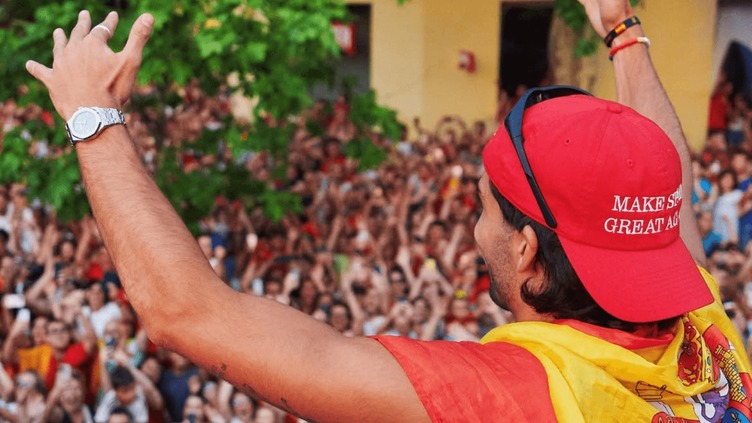
Source: X/FerranTorres
Within hours, Spanish commentators were arguing about what he meant by it.
Was he mocking US President Trump’s political agenda or decrying what was happening to his country under years of failed coalition government?
Nobody actually knows. Torres didn’t explain himself. He just wore it again the next day, for good measure.
The Value of Public Opinion
Here’s the issue we’ll cover today, because I think it matters more than the World Cup, that hat, and the actual message.
Torres is one of the best footballers on the planet. Like you and me, he has the right to hold a political view. But he wasn’t chatting with mates at a bar. He was standing on top of a bus, in front of the entire country, at the single moment when more Australians — sorry, Spaniards — were watching him than at any other point in his career.
That’s no longer a private opinion, but a platform. Platforms carry weight, notwithstanding whether he or she has done anything to earn the authority that comes with it.
I’ve criticised many public figures in the past for standing on their soapbox to preach certain values, many of which I was against. In Torres’ case, I agree with his message if that’s what he intended.
But that’s not the point I’m making today.
It’s something more fundamental — because this has happened many times before.
Politicians, actors, athletes, and CEOs have spent the better part of a decade telling us how to think about equality, climate change, sexuality, and open borders. Businesses shaped their strategy and branding on these issues. Go to their websites to read about their values, watch their marketing campaigns and attend their AGMs. Every second ad seems to carry a message that has nothing to do with the product.
Over time, we’ve seen it backfire with ordinary people. Much of it, when you follow the thread all the way through, ends up asking somebody else to pay for the sentiment.
Higher energy bills to fund the transition.
Higher taxes to fund the redistribution.
Pay extra and they’ll donate to an advocacy group.
Give up your job or reduce your pay to fund open borders and illegal migrant workers.
Agree or disagree with the message, the person delivering the message from the stage rarely carries any of that cost themselves.
A hat is one thing. You can dismiss it as a stunt, argue about it for a news cycle, and then move onto the next contentious issue.
But a decade of policy quietly built on these platitudes is another thing entirely.
Australia Past vs Present: Paradise Lost
I think about the 1980s a fair bit. Not because it was perfect — it wasn’t. There were problems in those days.
But among other things, many felt life was manageable. Most jobs paid enough for a single-income household to sustain itself if managed carefully. A personal loan or a subsidy wasn’t necessary for a family wanting the basics of life – owning your home, buying a car, paying the bills, putting food on the table, and having an emergency fund. There was even extra for a family trip or small luxuries.
Compare that to what a 25-year-old in Sydney or Melbourne is looking at today.
The cost of simply existing — rent, groceries, insurance, energy — has outrun income, with little relief in sight. Home ownership, the single asset that built the sense of security of my parents’ generation, is now out of reach for a huge share of people doing everything right.
A 22-year-old graduate may expect a secure and well-paying job, just as it has for several generations. But such jobs are becoming scarce. Not only that, but the definition of a well-paying job has also slipped further out of reach.
In the mid-1980s, the average income was around $20,000, while the median home cost around $80,000. By 2000, average income increased to around $43,000. The same house was worth around $300,000.
Today, the average full-time income is around $104,000, but the median home is over $1 million!
However, this figure is rosier than the reality for many Australian employees:
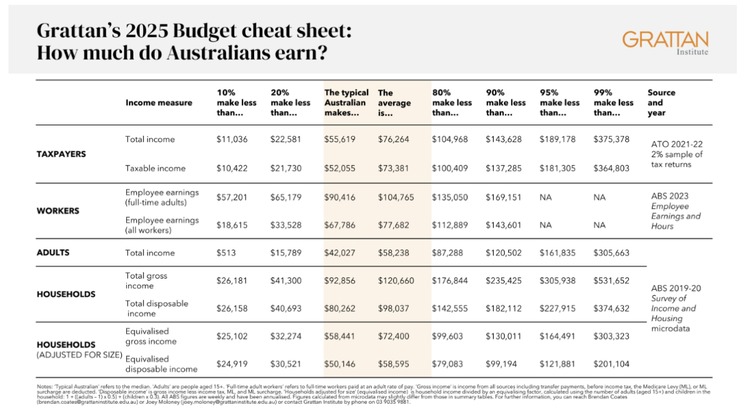
Source: The Grattan Institute
[Click to open in a new window]
Today, fewer than 5% of Australians earn over $200,000. Yet these high-income earners distort the average.
For this reason, today’s young Australians can feel something isn’t right. They don’t grasp the numbers, but they know it doesn’t add up for them.
The younger generation in Australia
– Pawns for the unscrupulous
This is where I think the real damage is being done — and it’s quieter than a hat or a publicly declared political message. It runs a lot deeper.
Imagine you’re under 35 years old today. You watched the basic deal disappear. You’d understandably be angry that the hope you had lived and worked for is in vain. The social contract is broken, having slowly slipped out of reach.
That indignation needs to go somewhere. Political parties, business strategists and academic think-tanks know this. They can see this as a resource to exploit, and they have it in spades.
Each election cycle, product launch, news bulletin, performance offers that generation a promise — housing reform, a fairer go, a seat at the table, or even a chance to make someone else pay for it. The price they pay: a vote, a subscription, an audience, a purchase.
Too often, the promise doesn’t deliver. The young person handed over their vote, their money, and a fair chunk of their optimism, with very little to show for it beyond a slightly larger sense of resentment than they started with. Their priorities aren’t important because another target group with more pressing needs and a louder voice will cut in front of them.
This isn’t a conspiracy. It’s how the system actually works. Some people have constantly found themselves disappointed because those who promised them hope have let them down.
Accident or by design, it doesn’t matter. For them, enough is enough.
Our next generation needs a
foundation…not a protest vote
Having laid out the issue, I want to explore ways to mitigate this societal problem.
Many believe that the way through this is a protest vote, another hashtag, or another hat. But that isn’t any different to my criticism of the public figures who do this. It’s externalising the problem – blow it up and create enough noise so someone else will fix your plight.
A better way is to get our own financial house in order first. Therefore, we’re not standing on the same shifting ground everyone else is arguing about.
Most of you reading this have probably done that. You were born at the right time, made the right decisions, enjoyed a break or two, under a system that wasn’t openly hostile to you.
So I’d go a step further than that today. I believe we have an obligation that goes beyond our own balance sheet. It’s time to help the younger generation realise that there’s a way around the system that currently fails them. Do not rebuke them for not handling their challenges like you did back in the day or lecture them about being resilient. We must first point out that they’re living in a system that stacks the deck against them.
Following that, reveal to them the secret of the monetary system — what’s really backing the currency in their wallet, how gold and currencies differ because the former held their purchasing power across every political cycle for thousands of years, and how a small, disciplined allocation to precious metals can build their financial foundations to reduce their life’s burdens.
I built this foundation back in 2013, refining it over time. In this presentation, I call Go Your Own Way, I explain how it works and the implications to help you build a strong foundation. If any of what I’ve described today sounds familiar — the sense that the rules keep changing after you’ve made your move, the feeling that the people setting policy have very little at stake in the outcome — you’ll want to understand how it all comes together.
More importantly, share it with someone you care about. Reveal to them how they can regain control of their wealth and destiny.
A hat gets one news cycle. A financial foundation, built properly, outlasts every single one of them.
Be your own voice, rather than let someone claiming to speak for you leave you disappointed.
God Bless,

Brian Chu,
Gold Stock Pro and The Australian Gold Report




Comments