



“…No more than in any other city,” replied Oz; “but when you wear green spectacles, why of course everything you see looks green to you.”
— The Wizard of Oz on the Emerald City
Markets are thrashing.
Like the involuntary spasms of an overcaffeinated teen, we find ourselves lurching between green and red. For every relief rally, there’s a sell-off.
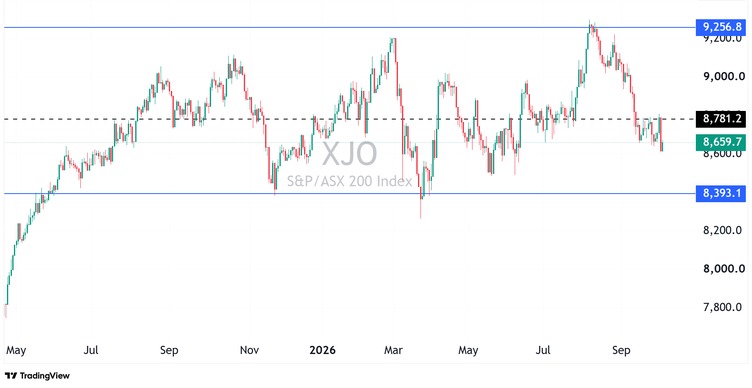
‘Violently going nowhere’ is a refrain I’ve heard myself say many times this year. The ASX 200, at the time of writing, sits down roughly 0.7% for the year.
As the index bounces within the range it’s occupied since late last year, it’s natural to ask where else your money could be working. Many look to the US with envy.
Source: TradingView
[Click to open in a new window]
Meanwhile, pockets of the market boil with diametrically opposed takes on where to next.
‘AI or bust’
‘Crypto is a scam — crypto is our saviour’
‘Gold is the ultimate haven — gold is dead money’
‘Bonds are going to sink us all — it’s time to buy’
To all the above, I just say, yes…
Time to go fishing
A couple of weeks ago, I shared a quote with my ATLAS readers when I recommended building cash and being patient.
“There is a time to go long, a time to go short and a time to go fishing.”
That quote comes from famous stock trader Jesse Livermore, a man who reeled between poverty and prosperity more than anyone could count.
|
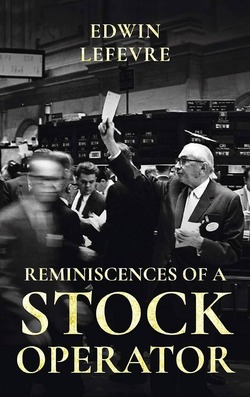
He’s widely considered the pioneer of day trading and was the inspiration for the main character in Edwin Lefèvre’s Reminiscences of a Stock Operator.
His escapades are as hilarious as they are cautionary.
Somewhere between his second and fourth bankruptcy, Jesse once again found himself out of cash.
He’d been tipped that it was a great time to buy cotton and gone all in.
The only problem was that the cotton trader who had given him the tip, Theodore H. Price, was secretly dumping his at the same time.
Lesson learnt: the person handing you the green spectacles may not be wearing a pair themselves.
Jesse eventually recovered and, by the end of WWI, had cornered the cotton market.
It took an invitation to the White House from then-President Woodrow Wilson to convince him to sell his holdings at breakeven to avoid harming the US economy.
When asked why he did it, he simply replied, ‘To see if I could, Mr President’.
I bring up Jesse because we also find ourselves at a manic point in markets.
In 2026, we’ve already seen:
- The largest ever IPO by SpaceX
- The largest ever public equity raise by Alphabet
- The largest ever private funding raise by OpenAI
- The largest ever bond issuance by Amazon
- The largest ever cash pile by Berkshire Hathaway
- The largest ever stock buyback program by Nvidia
- The first US$1 trillion dollar ETF by Vanguard
You could argue these records are always broken as markets push higher and inflation takes its toll — but that misses the broader point of the sheer scale of it all.
Adjusting for inflation, SpaceX’s IPO was 2.3x higher than the prior record by Saudi Aramco in 2019. That same adjustment shows OpenAI beat its previous record from 2025 by 2.9x.
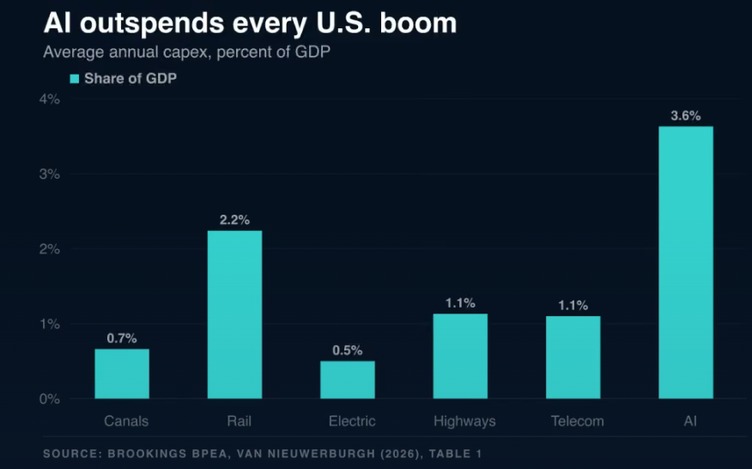
More broadly, the AI capex spree is now larger than the combined dotcom and railroad buildouts.
Source: PSV – Brookings BPEA
[Click to open in a new window]
These are genuine outliers that show how feverish the US market has become. And it’s a market Jesse would have found hard to resist.
The so-called Great Bear of Wall Street considered himself a student of human behaviour.
‘The game does not change and neither does human nature,’ he would say.
Famous for making roughly US$100 million from shorting the Wall Street crash of 1929, Jesse did not make that fortune by guessing the single day the market would turn.
He made it by recognising crowd behaviour he had seen many times before, then gradually building positions as the market proved him right.
That patience is the part of his story people tend to skip. In Reminiscences, the character modelled on him credits his biggest wins to sitting tight rather than clever thinking.
That’s the less glamorous half of the story. And probably the more useful one for you.
Patience is hard when you’re certain.
Spend enough time in any investment camp and everything starts confirming your view. Every dip becomes a buying opportunity. Every rally becomes the last gasp before the crash.
Eventually, you’re defending an identity with your savings.
I’d rather leave room to change my mind.
I’m not calling the top. Markets can keep setting records, and the ASX could break out of its range in either direction.
In the meantime, a choppy, sideways market tends to reward humility. Holding a bit of cash while others chase every swing leaves you with options when prices finally move with conviction.
Like Dorothy and her companions in the Emerald City, plenty of investors see only what their spectacles let them see.
Every so often, it pays to take them off, put a line in the water and wait for a proper bite.
Regards,

Charlie Ormond,
ATLAS and Altucher’s Investment Network Australia




Comments