



As the year comes to an end, I thought I’d be remiss not to leave you all with a reading and watching list to fill your downtime over the holiday period.
Whether you’re lounging poolside or hiding from your relatives, here are the books, podcasts, and long-form videos that helped shape my thinking this year.
The Future of Intelligence
For anyone trying to wrap their head around where AI is actually going, three conversations stood out.
Open AI co-founder Ilya Sutskever’s interview on Dwarkesh Patel’s Podcast was the year’s most talked-about AI conversation. It’s a bit deeper than the usual tech talk, so there is some jargon, but it’s still approachable. Here, Sutskever declares the ‘Age of Scaling’ is over. Simply throwing more compute at AI models won’t get us to AGI anymore. We’re entering an ‘Age of Research’ where new ideas matter more than bigger servers.
For the infrastructure side of AI, Dylan Patel’s Inside the Trillion-Dollar AI Buildout on Invest Like the Best is essential. Patel runs SemiAnalysis, a cottage-sized research firm that has morphed into the insider’s tool for everything AI. In this bird’s-eye-view interview, he explains the strategic chess game between AI’s top players and makes a sobering case that America needs AI to succeed or risk losing its global position.
Google’s AI leader, Demis Hassabis’s interview on The Google DeepMind Podcast rounds out the AI trilogy. The Nobel Prize winner discusses ‘world models’, the gaps in current AI reasoning, and why AGI might arrive by 2030. Worth pairing with the video AlphaFold: The Most Useful Thing AI Has Ever Done, which explains how Hassabis’s team solved a 50-year biology problem in months.
Geopolitics and Economics
|
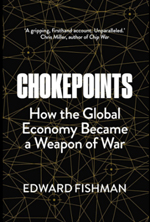
If you want to understand the weaponisation of global finance, Edward Fishman’s Chokepoints: How the Global Economy Became a Weapon of War is the book of the year.
Fishman was the Russia sanctions lead at the State Department, and he traces how America turned the dollar, microchips, and energy supply chains into instruments of warfare against Russia, China, and Iran.
A great read considering the power games we’ve seen in both AI chips and rare earths this year.
|

Next is Dan Wang’s Breakneck: China’s Quest to Engineer the Future.
Wang lived in China for six years and outlines how he thinks China has become an ‘engineering state’ that builds relentlessly.
While America (and us, you could argue) have become a ‘lawyerly society’ that blocks everything. But this isn’t a blanket pro-China book. This is an intricate and compelling read that seamlessly blends political, economic, and philosophical perspectives to explore what shapes China. From the factory floor to the top levels of the Politburo.
Ideas and Ideology
For a rare, thoughtful look at how Elon Musk actually thinks, his long-form conversation with Nikhil Kamath is well worth your time. Free from the usual soundbites, Musk ranges across AI, consciousness, work, money, space, and the psychology of building at scale. It’s a far more heartfelt interview from the world’s richest man, offering candid reflections on failure, risk, and meaning. It’s less a tech interview than a philosophical exploration of ambition in the age of artificial intelligence.
Peter Thiel’s conversation with Ross Douthat, A.I., Mars and Immortality: Are We Dreaming Big Enough? on Interesting Times, is vintage Thiel. He’s not someone I agree with, but it’s always an interesting listen with him. In this, he argues that technological progress has stalled, AI is overhyped, and (in usual Thiel fashion) warns that civilisational decline could bring about the Antichrist. Provocative and oddly compelling.
For the complete other side of the political coin. A fascinating dive into the intellectual roots of our current political moment, Quinn Slobodian’s interview on Joshua Citarella’s Doomscroll podcast is excellent. Slobodian, author of Crack-Up Capitalism, explains how neoliberalism isn’t dying, it’s mutating. An interesting take from the left.
Books for Reflection
|
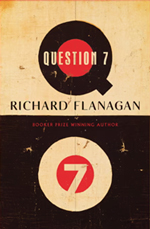
A slightly older book that I’ve only come around to recently. Richard Flanagan’s Question 7 is already being called the most significant work of Australian literature in a century.
Part memoir, part meditation on history, it weaves together his father’s experience as a Japanese POW, the bombing of Hiroshima, and Tasmania’s colonial past. Flanagan’s prose is extraordinary.
It’s a book about who we are and how we are, about what we do to each other and why. In light of the recent tragedy in Sydney, I think this one needs to be on the list.
|
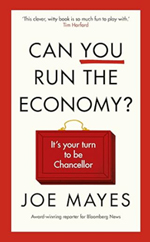
For a lighter, fun read. Can You Run The Economy by Joe Mayes is an interactive, choose-your-own-adventure.
The book hands you the keys to the UK Treasury and forces you to make decisions under political pressure, market stress, and public outrage.
Every choice has consequences, and there are no clean wins. It’s sharp, funny, and a reminder that economic policy is as much about power, timing, and narrative as it is about numbers. A great Christmas gift for that family member who thinks they can run the world.
So there’s my smattering of books and videos to keep you thinking over the holidays.
It’s a motley collection that’ll leave you better equipped to understand where the world is heading.
Happy holidays!
Regards,

Charlie Ormond,
ATLAS and Altucher’s Investment Network Australia


Comments