




Late last week, US President Donald J. Trump and an entourage of White House officials and executives from the largest US companies flew to Beijing for the long-awaited summit with his Chinese counterpart, President Xi Jinping. As US Air Force One arrived, they were greeted by a red carpet, the Chinese leadership, flanked by young Chinese youths waving small US flags.
Beyond the pleasantries and processions were negotiations to traverse differences, irreconcilable stances, and navigate the barriers built against the other.
What issues will they cover?
Which will they avoid?
Will there be acts of open humiliation or attempts to dominate?
Moreover, when the negotiations finished, and the President boarded Air Force One with his delegation, who had the upper hand?
To answer this, I thought it might be worthwhile looking at the movements in gold and silver at the close of last week.
Gold fell by around 3% over the two days to US$4,553 an ounce, while silver plunged by around 9% to US$78.74 to close the week.
Moreover, the US Dollar Index [DXY] inched up by less than 1%.
I might be taking a highly simplified approach here. However, you’ll understand at the end of the article why this might suffice.
As an aside, I’ll depart from the stance I’ve taken in my China Capitulation series in today’s discussion. Rather than pointing out China’s vulnerabilities and potential path to decline, I’ll focus on the summit’s outcomes and implications for the world.
Setting the scene for high-stakes bargaining
We’ve seen over the last 15 months how diplomatic relations cooled quickly between the US and China. It reached a point where some believed the two countries would descend into open military confrontation.
The main catalyst was the Trump administration launching a tariff war last April that sought to cripple the Chinese economy. The Chinese retaliated by tightening the export of critical elements, among other things. The global economy felt the heat as both countries were willing to sacrifice their allies and the rest of the world to gain the upper hand.
As the conflicts between Russia and Ukraine and in the Middle East continued to rage, the two countries fought through their proxies either directly or by providing logistical support. They were almost always on the opposite end of a contest.
Earlier this year, it appeared that the US could bend China over. That began when it launched a swift raid to capture Venezuelan President Nicolas Maduro and his wife. Then came the decapitation strike against the Iranian supreme leader, Ayatollah Ali Khamenei, further tilting the balance in favour of the US.
The prolonged holdout by the Iranian forces blunted this, even as the US Navy blockaded the Strait of Hormuz to try to starve the leadership into submission. So far, it’s a stalemate.
With both countries evenly matched, the two leaders knew the summit was about working through some of their problems, rather than to dictate their will over the other.
That was why the Trump administration brought along executives from some of the country’s largest companies. There were deals to make.
It was going to be a give-and-take.
Manoeuvres, concessions and
setting differences aside
According to various sources, the US-China summit yielded breakthroughs, new trade agreements, and mutual agreement on some issues. I’ll outline this briefly.
From a strategic perspective, the two countries will establish a Board of Trade and a Board of Investment to oversee their business transactions, capital commitments and tariff negotiations.
China committed to purchasing agricultural products totalling US$17 billion annually, 200 Boeing aircraft, and selected aerospace components from the US. China also agreed to grant US farmers access to markets that had been restricted before.
In return, the US would lift some restrictions on Chinese purchases of land and property in the US, and allow Chinese international students to enrol in US universities and colleges.
Some matters were less clearcut. The two sides discussed China’s control over key rare-earth elements and other critical minerals. While measures were made to reduce the bottlenecks in licensing and exports, China’s controls remained in place.
Regarding Iran, the US and China agreed that the Strait of Hormuz should remain open for free passage. President Xi agreed not to supply weapons to Iran. However, after the summit ended, Iran doubled down on charging a toll for access to the Strait. It even introduced a crypto-backed insurance scheme specifically for ships to pay the toll.
There were unresolved issues or topics that the two countries avoided during this summit. These related to Taiwan and restrictions on access to technology. Whether there are further negotiations beyond the summit, we will find out in time.
Symbolically, the summit marked a step toward thawing relations between the two most powerful nations. Rather than one country emerging triumphant, they sought to work on common ground.
There were clear signs of caution exercised between them. The US delegation received gifts and phones to use during the trip. However, they disposed of all these before boarding Air Force One.
Some observers highlighted this as a snub by the US. However, the Chinese authorities are world-renowned for surveillance, therefore the US delegation took painstaking steps to minimise risks.
Hailing a new global order
The US-China summit may have been underwhelming for many. They expected either significant breakthroughs or a spectacular fallout between the two leaders who had been threatening war against each other.
However, the absence of both extremes shows that a new global order is emerging.
The US and China knew clearly where they stood. They also knew which issues were worth addressing now and which could wait. Moreover, they made concessions that helped thaw their relationship while holding back on what is currently not negotiable.
So let’s go back to the start of this article where I mentioned that the pullback in gold and silver provided useful insights into how this summit could spell what lies ahead.
The rapid rise in gold and silver over the past year reflected both the declining value of fiat currencies and increasing geopolitical tensions. The escalating tensions between the US and China played a large part in this rally.
The pullback may be tiny relative to how much these two metals rallied.But the markets considered this summit as a step towards easing tensions between the two countries.
But does this mean that the bull market for precious metals is over? Not likely.
There are still other factors at play, including a new Chair at the US Federal Reserve, the Strait of Hormuz, the US mid-term elections, and increasing market anxiety over inflation. Watch how things develop on these fronts and whether anything else will happen that could affect the world.
It’s difficult to predict what will happen and how that will impact on the economy. But understanding gold’s power can help you protect your wealth during such uncertain times.
I’ve recently finished writing a book that describes gold’s history, how it behaves across different financial systems, and how to harness precious metals assets to build your wealth.
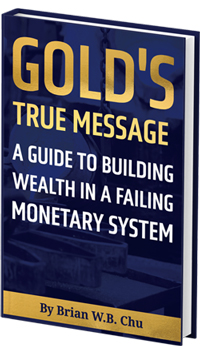
They may provide you with valuable insights to help you sail through the uncharted waters ahead.
Please click here to learn more about how to get this book.
That’s it from me. Enjoy the rest of the week!
God Bless,

Brian Chu,
Gold Stock Pro and The Australian Gold Report




Comments