




If you’re invested in gold and precious metals assets over the past few months, you’re probably experiencing an emotional rollercoaster or have become numb from what’s happened.
Who could forget the news headlines of queues of people outside bullion stores plastered across the TV and news websites from October 2025 to as recently as March 2026?

Source: Brian Chu
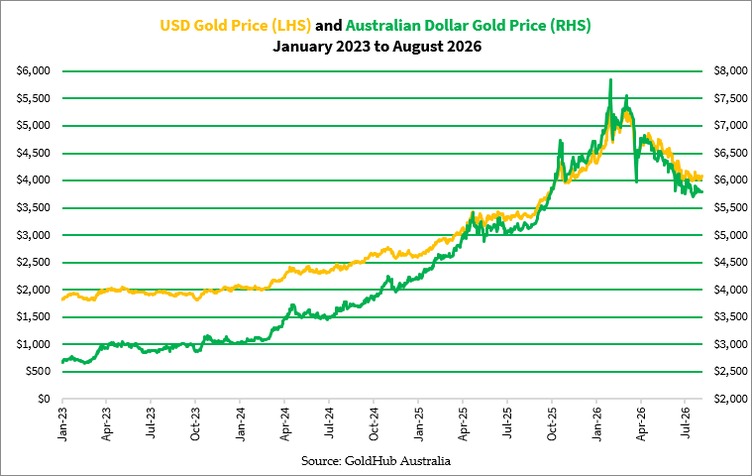
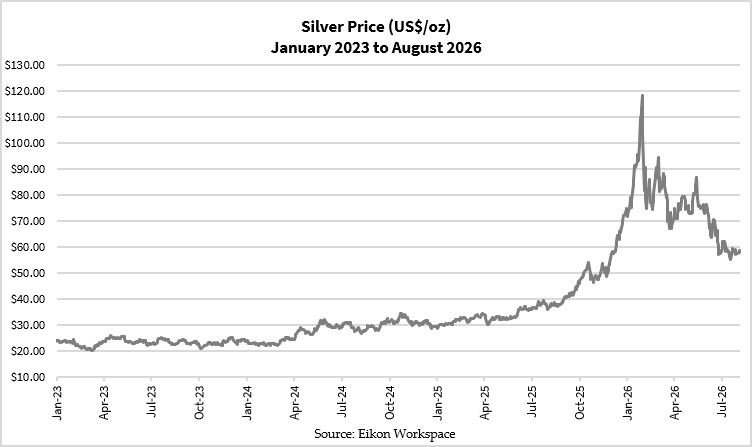
The gleam and glamour didn’t last forever, though. Just as financial pundits and gold enthusiasts were calling for gold and silver to break above US$6,000 (~AU$8,400) an ounce and US$150 (AU$210), respectively, the momentum broke in late January 2026. A flash crash sent gold down by almost 20% and silver down over 30% in a fortnight. Then the conflict between the US, Israel and Iran erupted at the end of February, beginning the five months of a rollercoaster ride that sent precious metals assets tumbling.
Your holdings in gold, silver and gold stocks tumbled sharply at the start. It bounced briefly before another selloff. Eventually, the selling is less abrupt, replaced by a torturous grind downwards, seeking a bottom that appears ever so elusive.
The emotional journey is nasty. The first plunge doesn’t cause you to panic. But as the selloff deepens, doubt quietly sets in. Over time, despair takes root and you begin to question every decision and beat yourself up with regret over actions not taken.
Today I’m going to explore this and provide some insights into how to handle these episodes with a view to win.
I’ll be clear about this – I’m writing this from first-hand experience rather than merely spectating!
From dizzying highs to here
Let’s look at how we got here firstly. Gold ran hard since 2024 to a level few of us would have predicted even eighteen months ago:
[Click to open in a new window]
Silver told a similar, more exaggerated story, as it usually does:
[Click to open in a new window]
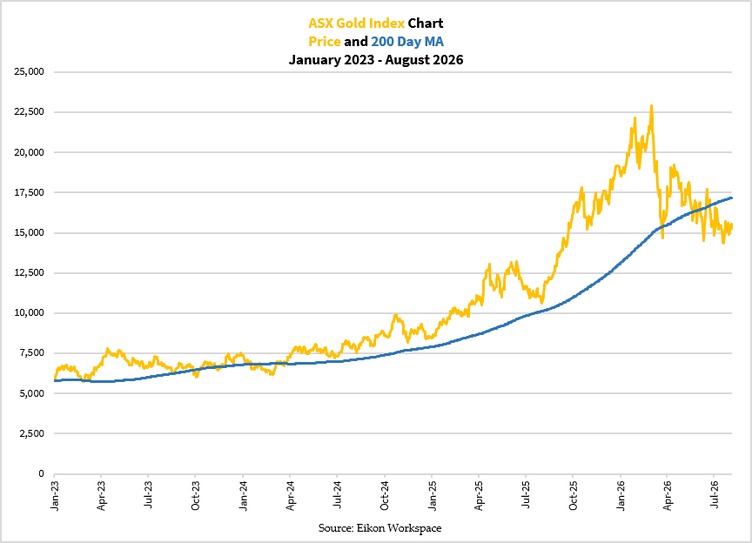
And the ASX Gold Index [ASX:XGD] that tracks the performance of gold producers and leading developers, experienced similarly wild swings:
[Click to open in a new window]
The correction in the last five months has erased the gains made since last October. It’s still well above where it was at the same time last year. What’s different is how investors are feeling. It’s a sharp contrast to the excitement last year, only because we climbed higher and tumbled back down.
The wildly changing emotions are what many are struggling with right now. They’re hesitating and asking the following questions:
Has the thesis for gold and precious metals changed?
Should they get out of gold stocks altogether?
I understand why they’re asking these questions. I’ve asked these myself more than once these past few weeks. But this is their emotional brain talking, not the analytical one. And emotions often lead to bad investment decisions.
So let’s set aside how we feel and look at the big picture
The lessons of 2013 and 2022
What we’re experiencing with gold, silver and gold stocks isn’t new.
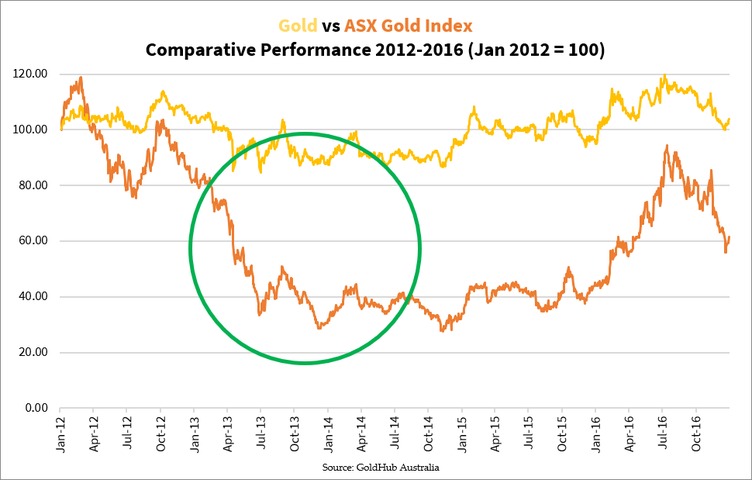
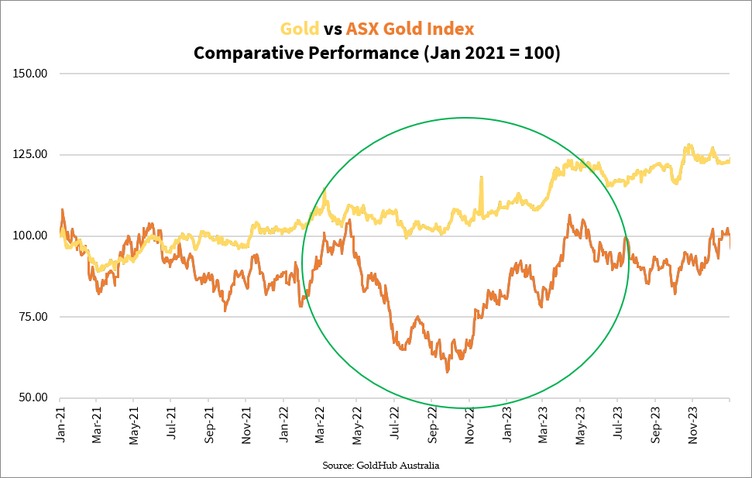
The events surrounding it may be, but the pattern is like that in 2013, which was when I started my journey in discovering the power of gold and precious metals assets, and recently in 2022, after the Russia-Ukraine conflict erupted:
[Click to open in a new window]
[Click to open in a new window]
As you can see above, the sharp declines led to recoveries afterwards. It takes time. It may seem easy to understand in hindsight because we know what happened afterwards. Right now, we’re in the depths. What’s ahead seems uncertain. But it will come to pass.
To answer the niggling questions about whether you made the wrong decisions, let the numbers tell the story.
Open your trading history from the past twelve months. Ask yourself these three questions:
Did you buy because you’d done the work, or because everyone else was buying?
Did you go looking for quality — production, cost base, balance sheet — or chase whatever was moving fastest that week?
When you sold, or thought about selling, was it because you’d planned that exit in advance, or was it on the spur of the moment, with your emotions doing the trading for you?
These were the same checks I ran on myself since 2013, having gone through three gold cycles. I held some gold stocks that were 70% below, even 90%, what I paid for. I saw some recover and make substantial gains, while others languished and even turned to zero when they went bankrupt (e.g. Calidus Resources and Millennium Minerals).
I realised my thesis was intact but some of my execution needed work. I bought in too early and overstayed my welcome.
That’s a very different problem, and it has a very different solution.
Focusing on the now and ahead
Rather than talking about the past, let’s focus on the current state of play. This should help us put facts ahead of feelings.
Gold has held the US$4,000 level through this pullback. Meanwhile, the ASX Gold Index has found buyers in the 14,500 to 15,000 point range in March, June and late last month. There’s increasing evidence to show these could be the support levels.
More important than price action, though, are the June quarter reports. Having reviewed the results of the gold producers across the board, the results were better than the market had braced for. Fuel costs remained elevated given that diesel is still the single biggest lever on a mining company’s cost base, as I’ve written about before. The positive outcome was that the larger producers managed to offset these costs with higher production volumes.
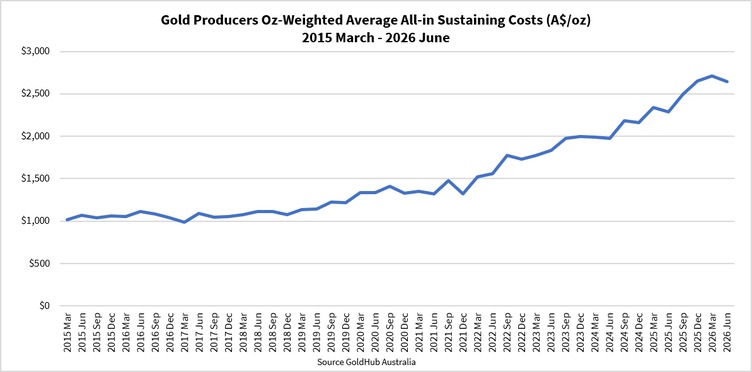
Our data showed the industry-average all-in sustaining costs (AISC) for the quarter was about $2,640. This came in below both the March 2026 quarter ($2,708) and, somewhat surprisingly, the December 2025 quarter ($2,648):
[Click to open in a new window]
While gold pulled back and dragged the operating margins down, almost all the producers increased their cash balance from their net sales. Conditions may be tough on-site but their performance was much better than in 2013-14 and in 2022 when many were burning cash because gold was much lower. We just came off a peak abruptly, so the pain of that overrode the reality that many of these producers are still substantially profitable.
More importantly, the froth has come off many gold stocks, whether producers, developers or explorers alike. The last two months show that value is re-emerging with share prices at more realistic levels.
On Iran, oil, and the doomsday instinct
Looking beyond what’s happening at the mine sites, the biggest driver on how gold, silver, and the broader markets is what’s happening with the geopolitical situation, specifically the US-Iran standoff.
The on-again-off-again conflict has caused investor confidence to fall while the US Federal Reserve mulls whether to raise interest rates. This could easily drag on, and take oil higher, causing a real disruption not only to petroleum supply but the entire economy.
That’s something I’m watching closely.
But one thing that’s worth highlighting is distinguishing the real risk of the escalating conflict and fears that a market-wide catastrophe is imminent. You may be familiar with or even subscribe to the narrative that this situation could spin out of control and trigger a major market crash.
I admit that was the very thing that converted me into a gold and precious metals loyalist in 2013. I banked on a collapse on several occasions since then. But I noticed over time this scenario I was busy imagining hasn’t arrived, even though a big correction would come and go. From this, I learned gradually to focus on the fundamentals and not let my imagination carry me away.
Riding above the storm of emotions to increase your chances of success
As I wrap up today’s piece, I want to reiterate that I’m by no means detached from the storm of emotions that come with a bull-bear market cycle. Especially the one we’re in now. But I’ve accumulated lessons through each one and realised how much more important it is to recognise the environment we’re in. The headlines will try to tug at your emotions, sowing doubt in your mind and tempting you to make bad decisions.
It’s times like these where you must let your numbers, rather than your nerves, make the call. Take time to study the numbers beneath the headlines and reassess your investment strategy. Are the companies trading at a reasonable price that you can back up with the data, not the sales pitch from management?
There is a discipline in successfully investing in precious metals assets, like any other asset. Following the crowd and letting your heart lead your brain don’t have a place here.
If you want further information and guidance on navigating this market, I have prepared this presentation for you. Click here to find out more about how to build a precious metals investment portfolio and the metrics I use to separate the data from the noise.
Have a good weekend ahead!
God Bless,

Brian Chu,
Gold Stock Pro and The Australian Gold Report




Comments