


• Skip to primary navigation
  • Skip to main content
  • Skip to primary sidebar
  • Skip to footer

Fat Tail Daily

Investment Ideas From the Edge of the Bell Curve

  • Menu
    • Commodities
      • Resources and Mining
      • Copper
      • Gold
      • Iron Ore
      • Lithium
      • Silver
      • Graphite
      • Rare Earths
    • Technology
      • AI
      • Bitcoin
      • Cryptocurrency
      • Energy
      • Financial Technology
      • Bio Technology
    • Market Analysis
      • Latest ASX News
      • Dividend Shares
      • ETFs
      • Stocks and Bonds
    • Macro
      • Australian Economy
      • Central Banks
      • World Markets
    • Small Caps
    • More
      • Investment Guides
      • Premium Research
      • Editors
      • About
      • Contact Us
  • Latest
  • Fat Tail Series
  • About Us
Commodities

Deep Water: The Future of Oil and Gas Exploration

Like 2

By James Cooper, Wednesday, 17 September 2025

Former geologist James Cooper reveals that the majors are shifting attention back to deepwater offshore basin exploration. In other words, marginal, high-cost wells. So, why are they interested?

It feels like a long time since I’ve seen this:

Last month, oil giant BP announced a significant discovery off the Brazilian coast, near Rio de Janeiro.

It was in an area known as the Santos Basin.

A spot where ocean depths exceed 2,000 metres! Almost two kilometres below the water line.

So, why bring it up?

I think there’s an emerging (but important) trend underway in oil and gas exploration: It’s going deep.

Why?

Easy sources of crude have been tapped.

Reserves sitting close to shore (or on land) have, for the most part, been discovered.

That’s why O&G companies are heading further offshore to uncover the next generation of discoveries.

But of course, that comes with inflated costs.

Exploring, as well as developing, oil and gas wells hundreds of kilometres offshore brings logistical challenges.

Transporting crude from wells to refineries in hazardous, exposed oceanic waters is one challenge.

But it also means tapping into frontiers where humans have never ventured.

Oil firms exploring these deep oceanic waters off the continental shelf sit at the edge of technological innovation… Like undertaking repairs thousands of metres below the water line.

With extreme pressures, these wells are far too deep for commercial divers; the contractors that would usually repair or maintain shafts, valves, and the many other parts exposed to extreme conditions.

Deep offshore O&G exploration and development lives on the edge!

Often relying on remotely operated vehicles (ROVs) as the only option to access deepwater wells:
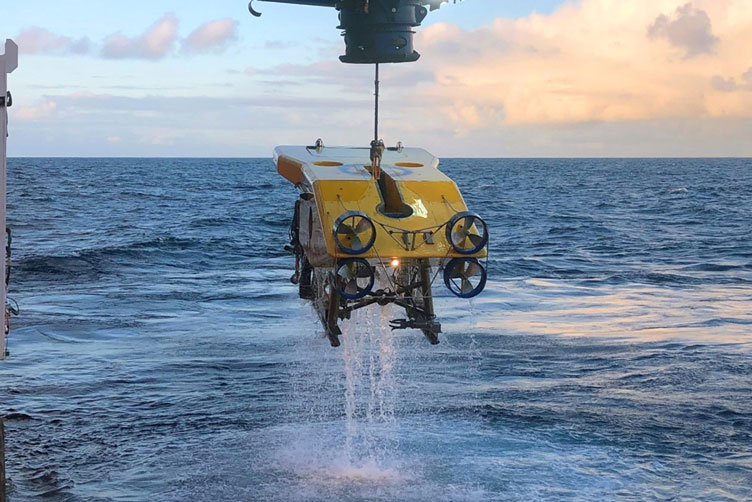
Source: Deep Ocean

So, it doesn’t take too much to understand that these particular sources of oil and gas sit on the higher cost curve for companies looking to bring them into production.

That’s why when oil prices began to fall after 2014, the deepwater oil and gas industry was hit especially hard.

In many cases, crude prices fell BELOW breakeven for deepwater producers, sending smaller players out of business.

In fact, because of the costs and the fact that these projects are barely viable, for the moment, only the majors are participating in the hunt for deep offshore sources. According to Wood Mackenzie:

“As fields get deeper and increasingly technically challenging, deepwater will remain an industry for those with deep pockets. It’s significant that 74% of the projected US$250 billion of pre-FID spend sits on the books of eight companies.”

Of those eight, include giants like Shell, Chevron, and BP; the only companies capable of playing in this lavish, seemingly self-destructive and capex-intensive game of deepwater O&G development.

So why do it?

Mining Memo’s Take

Clearly, finding future reserves of oil and gas means going into new frontiers, just like mineral exploration.

But for the oil and gas industry, that means moving further offshore into places never explored by humans.

But if these deepwater projects barely break even, why are the big players like BP bothering to look?

Especially given that the death knell for the oil and gas industry is seemingly around the corner, thanks to the global net-zero pledge.

Why spend hundreds of millions exploring for an asset that could potentially be stranded with no buyers?

In my mind, that’s the key question to ask. Do these multi-billion-dollar giants see something the rest of us don’t?

Hunting down and securing rights to deepwater basins.

Undoubtedly, they’re pouring money into these projects for a reason. That’s because they’re potentially preparing for what comes next…

Higher prices!

Why else would some of the world’s most influential and powerful companies risk so much capital in marginal projects?

For better or worse, oil and gas giants know we still live in an oil-fuelled economy, and that’s likely to exist longer than most anticipate. Perhaps decades.

So, why not plant their flag in basins that could one day become much more valuable?

Discover, then sit on these deepwater assets and wait for higher prices to warrant their development.

That’s the strategy I think they’re playing.

And as an investor, you should also consider this long-game tactic.

Accumulate a list of cheap oil and gas stocks with long-life projects, and wait for the inevitable recovery in oil and gas prices.

And that could arrive far sooner than most anticipate.

I’ll have more to say on that later in the week.

Stay tuned!

Regards,

James Cooper,
Mining: Phase One and Diggers and Drillers

All advice is general advice and has not taken into account your personal circumstances.

Please seek independent financial advice regarding your own situation, or if in doubt about the suitability of an investment.

Comments

Subscribe
Notify of
guest
guest
0 Comments
Inline Feedbacks
View all comments
James Cooper

James Cooper has been a working geologist in mines across Australia, Canada, and Africa since the early 2000s. He’s led the operations of tiny explorers through to huge producer outfits. He’s seen booms and busts firsthand and he also understands the cyclical nature of individual commodities. For example, James was right there when Barrick Gold launched an enormous $7.5 billion takeover bid for Equinox. That was the peak of the last cycle.

With his background as a geo and finance professional, he brings a unique insight and experience to Fat Tail Investment Research. He writes the broader resource-focused investing letter Diggers and Drillers and the ultra-speculative explorer-focused trading service Mining: Phase One.

James’s Premium Subscriptions

Publication logo
Diggers and Drillers
Publication logo
Mining: Phase One

Latest Articles

  • The Game of Diplomacy: Trump’s Greenland Gambit
    By Lachlann Tierney

    Trump's Greenland gambit exposes Europe's weakness while Canada pivots to China. The global Risk board is being redrawn — resource control trumps alliances.

  • Why isn’t Trump targeting Australia with tariffs?
    By Nick Hubble

    For almost a year, Australia escaped the worst of Trump’s tariff tantrums. Yet we should be top of the list of targets. Why did we escape?

  • The Greenland trade: two ASX sectors to benefit
    By Lachlann Tierney

    The Greenland trade is back. Trump's Arctic push, puts gold and critical minerals back on the menu – to the benefit of a number of Aussie companies.

Primary Sidebar

Latest Articles

  • The Game of Diplomacy: Trump’s Greenland Gambit
  • Why isn’t Trump targeting Australia with tariffs?
  • The Greenland trade: two ASX sectors to benefit
  • Base Metals: The Technical Break-Out No One’s Watching
  • Goodbye Markets, Hello Platforms

Footer

Fat Tail Daily Logo
YouTube
Facebook
x (formally twitter)
LinkedIn

About

Investment ideas from the edge of the bell curve.

Go beyond conventional investing strategies with unique ideas and actionable opportunities. Our expert editors deliver conviction-led insights to guide your financial journey.

Quick Links

Subscribe

About

FAQ

Terms and Conditions

Financial Services Guide

Privacy Policy

Get in Touch

Contact Us

Email: support@fattail.com.au

Phone: 1300 667 481

All advice is general in nature and has not taken into account your personal circumstances. Please seek independent financial advice regarding your own situation, or if in doubt about the suitability of an investment.

The value of any investment and the income derived from it can go down as well as up. Never invest more than you can afford to lose and keep in mind the ultimate risk is that you can lose whatever you’ve invested. While useful for detecting patterns, the past is not a guide to future performance. Some figures contained in our reports are forecasts and may not be a reliable indicator of future results. Any actual or potential gains in these reports may not include taxes, brokerage commissions, or associated fees.

Fat Tail Logo

Fat Tail Daily is brought to you by the team at Fat Tail Investment Research

Copyright © 2026 Fat Tail Daily | ACN: 117 765 009 / ABN: 33 117 765 009 / ASFL: 323 988