



Somebody drained close to US$80 million worth of Bitcoin last Thursday.
Nobody picked a lock or stole a laptop.
The victims were using a Coldcard, a hardware wallet. It’s a small offline device, the closest thing crypto has to a safe deposit box.
Set one up, and it spits out a seed phrase — a master password. Those 12 or 24 random words are the only key to the money.
The randomness is the entire point. Guessing a properly random seed takes longer than the universe has existed.
A firmware bug caused certain Coldcards to stop using their proper random number generator back in 2021. They fell back to a predictable one instead.
So the seeds were never really random. Anyone who worked out the flaw could rebuild them on a laptop at home, without ever touching the device.
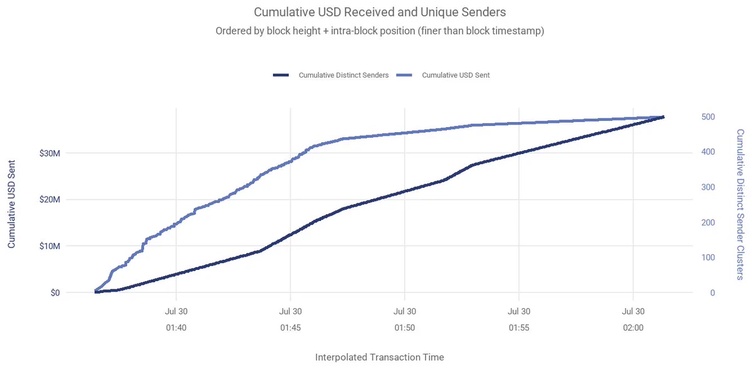
That’s what happened on 30 July. Somewhere between 500 and 1,200 wallets were emptied in about 40 minutes, roughly US$30 million of it in the first ten.
Source: X, Chainalysis
[Click to open in a new window]
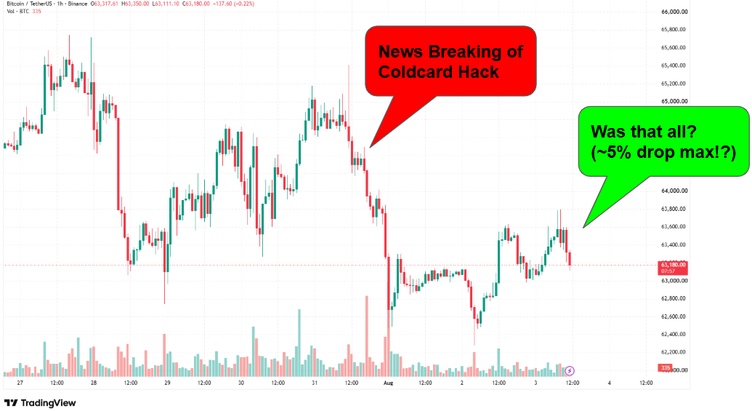
Bitcoin barely flinched. Maybe the bottom is already in?
Source: TradingView
[Click to open in a new window]
The hack sent me somewhere else though.
Down the rabbit hole
Bitcoin was sold to a generation as the hedge, hard money outside the system and beyond the reach of human error.
It turned out to be only as hard as the code one engineer shipped five years ago.
Here is the thing I keep circling back to.
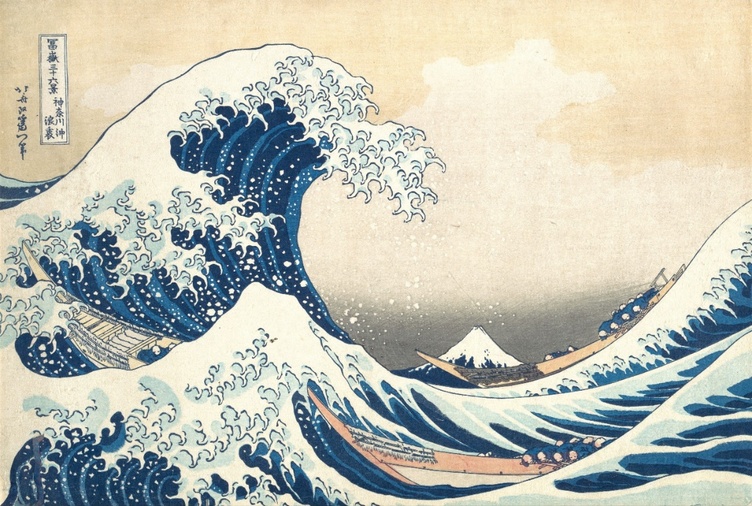
Sentiment now moves in enormous waves, and AI has turned this market into a maelstrom of emotion.
Source: Wikipedia
Back in the day (a couple of years ago in crypto time), an $80M BTC hack would have sent shockwaves through the industry and lead to at least a few days of big headlines in the mainstream financial news outlets.
Now it registers a shrug.
Part of that is because AI has amplified emotions and given retail investors new tools to trade the madness just like a hedge fund on Wall St.
Everyone’s a quant now
The Wall St money machines grind on.
For years, we’ve seen hedge fund quants scrape together millions of tiny edges and stitch them into a return.
That toolkit is now mainstream.
Ordinary traders are building options bots with AI coding assistants and plugging them straight into their brokerage accounts.
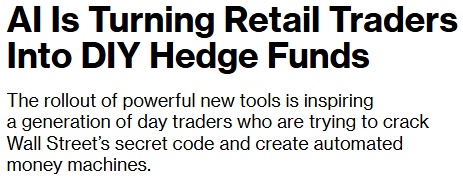
Bloomberg profiled this trend recently:
Source: Bloomberg
One of the traders lost a quarter of his stake training his model, fixed it, and is up 14% this year.
Another has six bots running, one of which manages a fifth of his retirement savings.
The researchers Bloomberg spoke to sounded a warning worth repeating.
Everyone is feeding the same data into the same handful of models and getting back the same answers, which points to wilder swings ahead.
So what the hell is an analyst’s
edge in this market?
I know small cap fund managers whose analysts now have the tools and the resources to build big hedge fund-quality trading products to make moves on the ASX.
So the answer for me lies in transcending that race for an edge using AI tools and data.
Call it a Nietzschean “overcoming” or simply playing to your human edge.
(Definitely try to learn about and use all the flashy new AI market tools available, I certainly do)
But the human edge lies in the heuristic reasoning, judgement, and the ability to cast your vision into the future. That will allow an analyst and individual investor to excel over a longer timeframe.
And above: all the ability to withstand the psychological pain of paper losses just as effectively as the siren song of paper gain greed.
It’s not a flex, it’s admiration
My father bought Tesla at 18 bucks.
Still holds.
I admire my father for the judgement he made about an asset value.
But he also made a judgement about another person’s character, skills and strength of will.
Dad backed Elon early!
Maybe it was a crystal ball, maybe it was tea leaves.
Maybe it’s the philosophy academia.
Maybe that and more.
But when you see that little glimmer amongst all the dross in the small cap market, examine it.
Turn it over.
And hold onto the idea behind it (until, in an ideal and future world) that little diamond shines bright in the eyes of others.
It’s sure dark in the caverns of the ASX small-cap and micro-cap worlds.
My bedtime stories as a kid were The Lord of the Rings and The Odyssey.
Sometimes I feel like I’m snatching at whisps of smoke in the shadows.
Trying to answer riddles with Gollum in a cave or outwit the Cyclops.
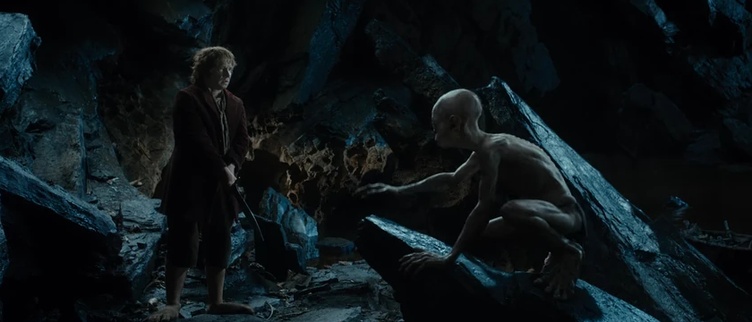
Source: Fandom
And then occasionally there’s a ray of that forward vision I was just talking about…
Tesla at $18 bucks.
True story.
Tomorrow, I’ve got some more reflections to share with you.
The kind of reflections that led me to recommend a micro-cap 7 months before Gina Rinehart took a 5% stake in the company to help secure a supply of a critical mineral that Elon’s SpaceX will be needing a lot more of.
Full circle.
Early days there, but that’s another true story.
Warm regards,

Dr. Lachlann Tierney,
Australian Small-Cap Investigator and Fat Tail Microcaps





Comments