




Yesterday morning, I stepped out of a Skippers Aviation plane at Meekatharra airport in the mid-west region of Western Australia. I’m up here to attend a Native Title Agreement signing up in an Indigenous community near the town today.
There’s no taxis waiting at the kerbside. Nor can you book an Uber. The town is 5km away from the airport, among scrublands and disused mine sites.
Luckily, the wife of a church pastor had struck up a casual conversation with me during our journey as I sat near their family of five. She introduced me to her husband gradually and we talked about our upcoming plans. They were going on a mission trip in another local community. Someone from this settlement came to pick them up at the airport, and they offered me a seat.
Problem solved. No need to seek help to hitch a ride, or worse still, walk the lonely stretch of road used by cars, motorcycles, off-road vehicles, and road-trains hauling ore, mining equipment, and critical supplies.
Arriving at Meekatharra, I took some time to breathe in the setting. This is a township situated between several gold mines, both historical and operating. Today, the key operators include Westgold Resources [ASX:WGX], Meeka Metals [ASX:MEK], New Murchison Gold [ASX:NMG], and Great Boulder Resources [ASX:GBR], among many.
The roads that financial statements
don’t account for
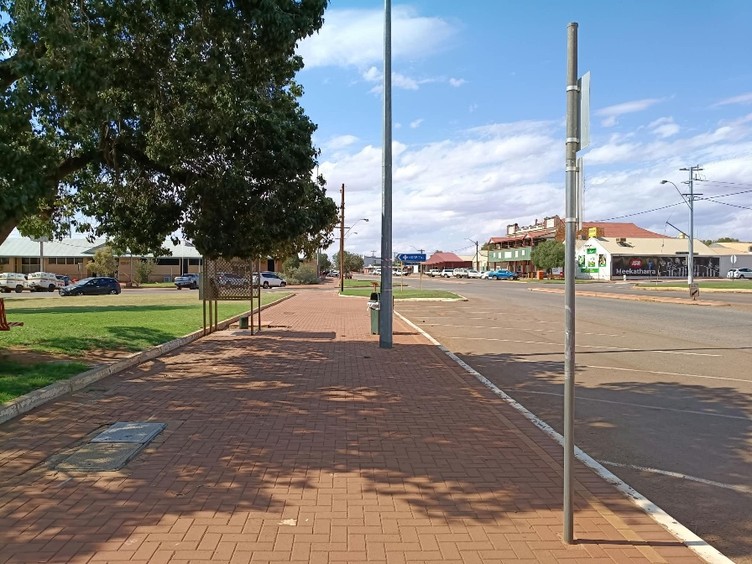
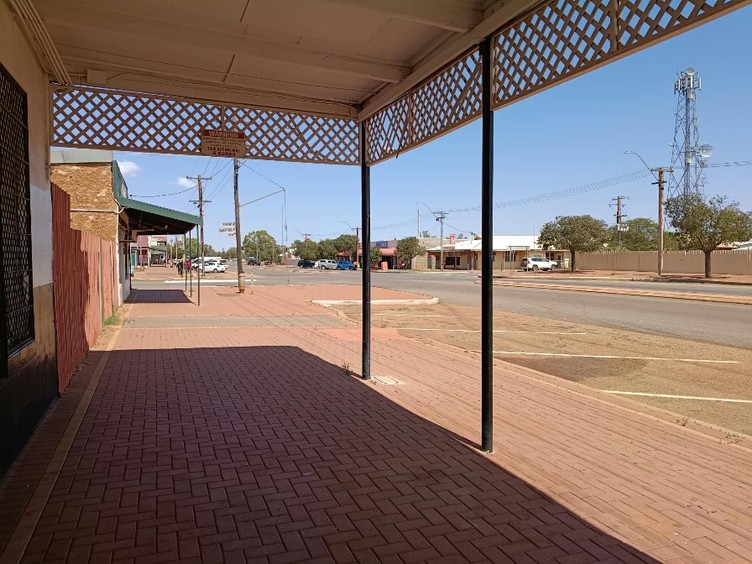
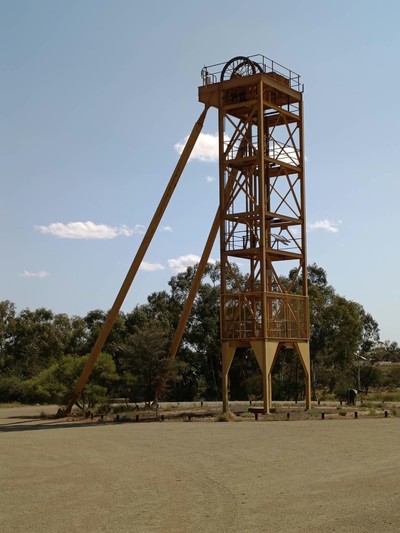
Here’s the Main Street, with the police station, a collection of hotels and pubs, the IGA supermarket, and a smattering of shops:
Source: Brian W.B. Chu
You can see that it’s a little rundown, at least when you consider the vast riches that are beneath the ground in the surrounding areas.
Walking down the Main Street, I would see a few road-trains pass through. With the rising diesel prices today, I started to think back at how the gold-oil ratio would impact the profitability of many gold producers and other mining companies for the coming quarter. Incidentally, one reader, Will, left a comment for my article last week, stating that during a briefing by Evolution Mining [ASX:EVN] for their full-year results, management stated the cost of diesel contributed to only $43 per ounce of gold produced.
It seemed minor, 2-3% of the reported all-in sustaining costs (AISC). But then I thought the price of oil and diesel affects other input costs beyond this directly attributed figure. There are costs related to supplies, wages, utility bills, etc.
As I walked into the town’s Community Resource Centre, I was about to find another piece to this puzzle…
A 5-minute conversation became an hour-long crash course on a gold town
I had barely walked through the door of the centre when a confident, well-spoken woman greeted me and asked me what brought me to the town. I explained to her that I was here for a short stay as I have an errand up in the local Indigenous community the next day. Knowing that I was here on a mining trip, she kindly shared with me the town’s history and her own experience living here with her family for over 20 years.
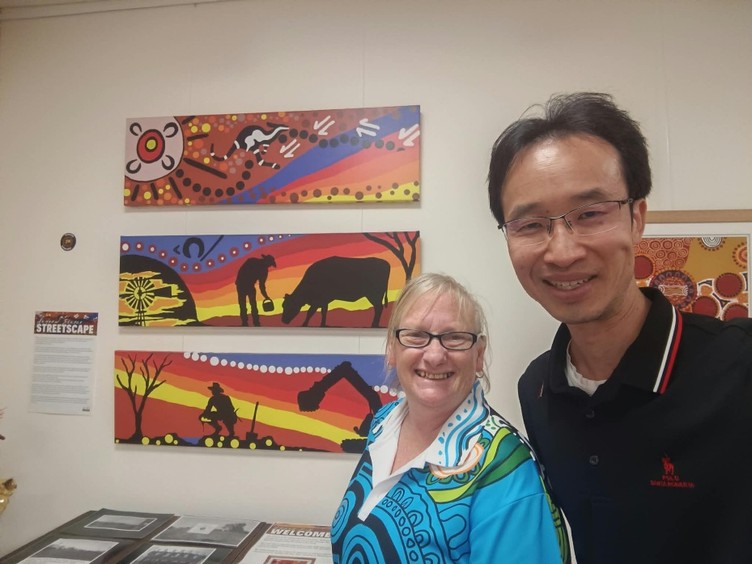
As the manager of the Community Resource Centre, Jo Bonilly, wore many hats. The centre was a community hub assisting the community residents with essential services including document and license registrations, organising cultural activities, tourist enquiries, and family support. She showed me around the centre, including the artworks of local finalists in a competition. Here’s a photo of us in front of one entrant:
Source: Brian W.B. Chu
One topic led to another, and at one stage she talked about how the Shire of Meekatharra could become livelier, thereby becoming more fitting as a town servicing several mine operations around it. Having lived among a large proportion of Indigenous people, she had many ideas for engaging residents in these plans. However, she noted challenges in coordinating plans and securing funding.
It is worth noting that decision-making for the Shire of Meekatharra isn’t straightforward as that is done at the Mid-West administrative region level. This incorporates Geraldton, Wiluna, Mount Magnet, Murchison, Cue, Sandstone etc. These towns are among the richest mineral-bearing ground in Australia, contributing generous amounts of royalties to the state government and taxes to the federal government.
Yet the benefits provided to the state government aren’t reciprocated.
A development initiative mining
companies should care about
Among several projects that Jo believes the state government should consider as an important priority is paving the remaining 113km of the 180km segment of the Goldfields Highway connecting Meekatharra with Wiluna. This stretch of highway has seen many accidents, including fatalities, over the years.
In 2016, the State Government earmarked $60 million in a Royalties for Regions investment to seal the unpaved sections of the Highway. By July 2024, only 14.86 km was paved. The shire subsequently asked the government why it couldn’t allocate $90 million from a forecast $3.7 billion state surplus to complete the job.
Since then, the shire has renewed calls on 15th May 2026 to the Federal and State governments to follow up.
Jo understands that regional and remote areas of the state, which receive different levels of funding, are lower priority for pragmatic reasons. She would prefer more decentralisation so that councils can retain more resources. Moreover, the shires, instead of the state government, make decisions that target their localised priorities. The bureaucracy has become unnecessarily burdensome and counterproductive.
Jo isn’t merely sharing this wish-list with me as an interesting conversation to make me feel welcome in this town. She has plans. She will take some of these issues and proposed pathways to Perth in a coming meeting with the state’s justice department.
One thing she mentioned was her desire for more mining and logistics companies to consider backing such a proposal. After all, better roads reduce fatalities and accidents, allow for more efficient trips to improve productivity, and reduce wear and tear on vehicles.
In an environment where fuel costs have increased substantially, these improvements help offset the impact. They are investments that the authorities can make to provide a tangible return.
Furthermore, making Meekatharra a more inviting place for people to settle can greatly benefit the mining companies and local businesses operating in the town. Many rely on temporary shift workers who are expensive to hire and retain, while their broken work patterns can affect productivity.
Beyond financial statements and price charts
Without talking to Jo, I wouldn’t have seen such a direct case of a hidden cost that appears on the financial statements of many mining, logistics, and agricultural businesses. Infrastructure provided and maintained by both government and private operators is an integral part of day-to-day activities. However, poor maintenance and incomplete facilities are costly for both businesses and the broader community.
This matters to you and me as Australian citizens and investors in public or private companies. That’s because all these facilitate our country’s business activities and help produce wealth. The mining companies operating in this region would stand to benefit the most. An investment by them would deliver returns through a combination of higher revenue, lower costs and the risk of catastrophes and road fatalities.
We won’t easily find these by simply studying company financial statements. However, recognising these issues by talking to locals on the ground may allow us to discern between companies that are more profitable than others. That’s because these decisions affect the region and the businesses operating in it, something that goes beyond production, costs, and economic figures.
Before closing, tonight I’ll be hosting a free online trading event BUY. BID. BOOM. at 7pm AEST. I’ll explain what’s driving the recent run of takeovers in Australia’s gold sector… and how to position yourself in the companies I believe are most likely to be next. I hope you can join me. Click here to register now.
This imperfect system isn’t merely conjecture. Jo spelled it out with some examples in my exchange with her.
As for Jo, the Meekatharra township, and the surrounding regions, I hope today’s article resonates with you. If you have a way to advance their cause, then learn more about how you can contribute by visiting this site and reaching out to the team.
That’s it from me for today’s article. Have a good weekend ahead!
God Bless,

Brian Chu,
Gold Stock Pro and The Australian Gold Report




Comments