




At the close of last week, the US and Iran announced a ‘peace deal’.
Of course, this term is an overstatement.
Strictly speaking, the two sides have agreed to hold fire for another 60 days while they iron out a proper deal.
The terms of the ceasefire agreement were publicised overnight. What could unfold in the next 60 days is anyone’s guess. It could be a continuation of what we saw since April, hostilities resuming and escalating into a full-scale war, or something else.
There’s no shortage of analysis and projections from various institutions and news outlets regarding the implications of this ceasefire agreement. Many have thrown their two cents’ worth on who has the upper hand.
One glaring gap I’ve noticed among those who analyse the unfolding saga is a lack of understanding or ignorance of Iran’s internal affairs. This is especially true with the mainstream media and foreign affairs think-tanks, which have largely been critical of the Trump administration. Their perspective focuses largely on westernised thinking and taking a static view of the global system. Their analysis often neglects how parties adapt to major changes, resulting in a new set of dynamics. We’ve seen this with the oil price, the structure of OPEC, and geopolitical relations, including a realignment of alliances and trade partnerships.
Knowing how Iranians reacted to this agreement allows you to understand why the Trump administration acted as it did. It may better explain the big-picture objective set out by the administration when it sent the Delta Force into Venezuela, as I discussed in my first article of The China Capitulation series.
If you look carefully at how things have unfolded so far, the objective is still well in play.
I will unpack this in today’s article.
Understanding Iran’s political
and social structure
The Islamic Republic of Iran is a unique state, being a mix of a military dictatorship and democracy. The government comprises the following tiers and branches:
The supreme leader, the Ayatollah, who holds the ultimate authority,
The council of clerics and jurists that acts as the Ayatollah’s advisors and gatekeepers of power,
The Islamic Revolutionary Guard Corps, the elite military body that enforces the will of the leadership,
The civilian government, comprising the President and parliamentary leaders elected by the Iranian population. This body is responsible for managing day-to-day affairs, approving budgets, and passing laws. This branch of government has limited autonomy as the Ayatollah’s advisors must approve these representatives before they can serve in Parliament. Furthermore, they have the power to reject any laws that it passes, and
The national security forces comprising the Artesh (regular military), the Ministry of Defense (responsible for support, weapons advancement and procurement), police and internal security, and the Basij (paramilitary force acting under the IRGC).
From the outside, Iran operates as a coherent body in which each branch of governance performs its own role to ensure the country’s good order. However, power vests with the Ayatollah, the clerical leadership, and the IRGC. All other branches are subordinate to them. Moreover, these branches control a vast majority of the country’s resources and wealth, which they reallocated to military installations and lavished upon themselves to strengthen their grip over the rest of the country. It also has a strong network in the Middle East, including the Hezbollah and Houthis, as well as organisations assisting with evading sanctions. Some family members of the regime live a lavish lifestyle overseas as they spread their anti-Western influence. Most prominently, the US recently deported the niece and grandniece of the former head of the IRGC, Qasem Soleimani, from Los Angeles.
Iran’s internal division – Collective
amnesia or selective ignorance?
Before the world saw the mass protests in the country followed by its brutal suppression by the IRGC, police and the Basij in January this year, few were aware of how divided the country was. Iran’s economy has been in dire straits for over a decade. It began with its expulsion from the SWIFT system in 2012 for pursuing its nuclear weapons program. Natural disasters, including droughts and earthquakes, caused widespread damage, crop failures, and economic stagnation added to the misery.
The Iranian population harboured a long list of grievances against the regime, such as the authoritarian rule of the Islamic theocracy, runaway inflation destroying their livelihood, widespread suppression of society (e.g. women, those of other spiritual faiths and religions), censorship, access to necessities, etc. When living standards became too difficult to bear, these boiled over to protests. In the past, the ruling regime would suppress the uprisings .
But most recent protests at the start of this year caught the world’s attention. These spread across the nation, with calls for the regime leaders to step down. The Ayatollah responded by ordering the protesters to disperse, before sending security forces to violently suppress them. These forces killed between 30,000-40,000 protesters in a fortnight, leading to worldwide outrage and condemnation.
Many Western nations had initially encouraged the protests. The Trump administration even threatened to punish the Iranian regime for the massacres, but didn’t follow through.
On 28th February, following repeated exchanges of missile and drone strikes between Iran and Israel, the US launched Operation Epic Fury. This comprised decapitation strikes against Iran’s leadership and key military infrastructure. Among the first targets were the Ayatollah and several high-ranking military and religious leaders. The country’s official media declared their deaths early morning on 1st March. The Iranian regime soon responded with heavy missile and drone strikes, and mined the Strait of Hormuz. It warned that vessels sailing the passage could face attacks. This effectively began the closure of the Strait.
The two sides agreed in early April to a ceasefire, but the US Navy changed tactics and launched a full blockade of the Strait of Hormuz. Dubbed Operation Economic Fury, the Navy prevented ships from entering and leaving and engaged in a search and destroy mission to bomb coastal military facilities, and destroy mine-laying vessels and small attack crafts.
What began as Iran holding the global oil trade hostage effectively backfired. This is because Iran’s key revenue source was its oil sales, valued at around US$500 million per day.
By early May, some of Iran’s oil-production facilities had to shut down because they had run out of oil storage. Meanwhile, the US Navy had guided several ships through the Strait of Hormuz, effectively undermining Iran’s plans to close the Strait. Last week, President Trump declared that around 100 million barrels of oil had left the Strait of Hormuz in the past month.
The Trump administration faced increasing criticism over the conflict. These included the risk of repeating the past wars in Vietnam, Afghanistan and Iraq that led to unnecessary deaths, an economic crash arising from the oil price shock, and fighting on Israel’s behalf. There is weight to their criticisms. Most importantly, the Trump administration could lose its support base if the standoff at the Strait persists to the point of tipping the economy over the edge.
That said, these critics have failed to consider, or simply ignored, the impact of this conflict on Iran. They make their predictions assuming that Iran, which had been grappling with itself before the conflict began, can hold out longer than the US.
How the ceasefire may spark
an internal civil war
Can Iran truly hold out? It’s true that the country has gone through many tests and challenges, both internally and under foreign pressure.
What’s unprecedented today is that the country has lost many top members, key military installations, and depleted a large portion of its weapons. Without an air force and navy it cannot control of the Strait of Hormuz, its most important leverage point and source of income. Furthermore, the country’s economic and social divide existed before the conflict. The conflict has exacerbated this divide and weakened the regime’s ability to impose its authority like it had.
You may recall that shortly after the nationwide protests broke out in Iran, the regime shut down its internet communications. In the past, countries with authoritarian governments imposed a media blackout when they were breaking down (for example, the swift downfall of the Romanian President Nicolae Ceaușescu in 1989). This is to prevent the world from seeing what’s happening inside.
Despite this, some managed to leak footage of what was unfolding inside the country. That was how the world learned of the brutality of the Iranian security forces that shot protesters and even went into hospitals to find injured protesters to execute.
The internet blackout lasted 88 days, before it resumed service on 26th May. Since then, more footage has emerged, this time showing a divided country (more of this shortly).
During the blackout, the Iranian regime communicated with the world and relayed its intentions and demands through its state media. We’ve seen the Iranian regime deliver confusing messages during its negotiations with the Trump administration.
Some attributed this to the regime having the upper hand and playing the US and its allies for fools. While others see that those relaying their messages come from factions with increasingly disparate views.
It’s difficult to ascertain which is true. However, since the bombing of the Ayatollah and many senior leaders in a secure compound, the leadership dispersed. Moreover, these leaders had revealed their locations through the surveillance camera networks they set up across the country, making them vulnerable to targeted strikes. To prevent that, they have taken refuge in secure underground caverns. The only way to reach them is in person, with the journey taking several days.
Therefore, the Trump administration is effectively negotiating with decision makers who take several days to receive messages and respond. Meanwhile, the civilian government representatives must go back and forth to act as mediators. Much can happen in between, notwithstanding the need for the leadership to coordinate with provincial government leaders.
While some claimed the US had capitulated to the Iranian regime’s demand, they have missed two key matters.
The first is their assumption that Iran will receive their payments soon without losing control of the Strait of Hormuz. A closer look at the terms published overnight shows the funds are payable only upon satisfaction that the Strait of Hormuz is open and that the country will not procure nuclear weapons or pursue the uranium enrichment program. Moreover, these funds will come from other parties that wish to contribute to investing in rebuilding Iran.
The second is the reaction of the IRGC leaders and the pro-regime Iranian people. The supreme leadership is aware that rearmament is unlikely without the lifting of the blockade and the resumption of its revenues. That is why the IRGC leaders declared that they may still threaten the free passage at the Strait. President Trump responded to that by saying that bombing will resume should that happen.
Some have missed the growing rift within Iran. This is instrumental to the country’s vulnerability as it entered this agreement. The response of the pro-regime civilians after the ceasefire agreement was announced shows this rift clearly. Here is a recent video by Tousi TV of pro-regime civilians denouncing the Iranian Speaker of the Parliament, Mohammed Qalibaf, and the Foreign Minister, Abbas Araghchi, for accepting the deal:
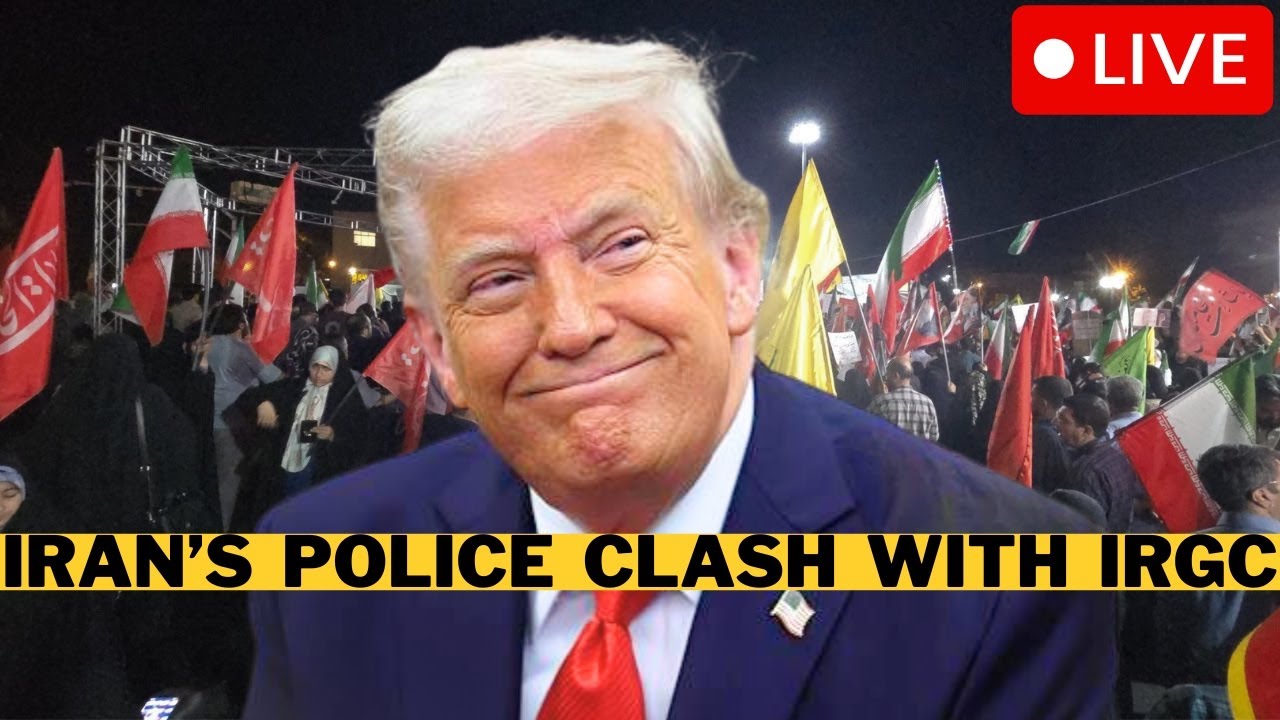
Other geopolitical analysts who have been following the limited footage from inside the country during this period have also confirmed this widening division. Geopolitical strategist, Andrew Korybko, discussed in this article the potential winners and losers of the latest ceasefire agreement. He highlighted that the terms of the agreement favoured the civilian government, which leans on restoring relations with the West, over the clerical leadership, which supports the status quo. That’s likely why the pro-regime civilians denounced Qalibaf and Araghchi as traitors for making the deal.
While I’ve only quoted two examples, Middle Eastern news publications, including Gulf News, have also followed the country’s growing divide.
Viewed through a strategic lens, the current developments don’t line up with claims that the US blundered this ceasefire agreement. The conflict can drag on for longer or escalate, but at a massive cost. The US would have pursued this if it intended to conquer Iran. However, taking the precedent in Venezuela earlier this year, I suspect the ultimate objective is something else.
One explanation is to prevent China from obtaining cheap oil. Venezuela was an easier operation. Iran was more delicate, given its strategic location and ability to threaten the entire world’s economy. However, the ceasefire agreement includes free passage in the Strait of Hormuz, which would free the chokepoint.
Some say that the US has capitulated to Iran, because it is giving away more than it could receive. As long as the Ayatollah and the IRGC remain, they retain the option to threaten the Strait of Hormuz at any time.
Even if the funds are released to Iran, it is possible that the rift will grow as different government branches argue about where it goes. Moreover, the conditions imposed on the funds may shift the balance of power. The objective for the US is to steer the Iranian government to become less of a threat to the West and its neighbours in the Middle East. This will be sufficient for Iran’s readmission to the SWIFT system, thus bringing Iranian oil back under the Western oil market. As a result, China can no longer buy discounted oil, an unfair advantage it once enjoyed to fuel its economic growth.
In summary, the development of the Iranian conflict is indeed complex to wrap one’s mind around. Taking a Western-centric perspective leads to one concluding that Iran has prevailed over the US and Israel.
Why would the US throw away its military and economic advantage?
The missing piece is in Iran’s fragile economy, divided leadership, and weakening diplomatic position. Its enemies have exploited this during the conflict, forcing them to reluctantly come to the negotiation table rather than pursue mutual destruction. It’s true that the regime can hold the world hostage. But the bombardment by the US and Israel, as well as Russia and China backing off from Iran, may mean this is no longer viable.
With each passing day, the resources that had enabled them to maintain their grip are dwindling. The ceasefire provides additional time to let this rift play out.
So what does this mean for the markets? The default expectation is that it is another two months of waiting with no resolution afterwards. Does that mean you should batten down the hatches because of the uncertainty?
Regardless of the outcome, one thing is certain. The world saw how a chokepoint could threaten the energy supply chain and the economy. Rather than sit and wait for things to return to normal, many countries and businesses have adapted to secure their energy sources. Most prominently, we saw how oil tankers have re-routed and countries pursued energy security as national policy. Besides this, we’re also seeing countries and businesses adopt alternative sources of energy, including gas, nuclear, renewables, and batteries. This provides substantial opportunities to businesses and investors alike.
We have been following these developments. Among many, I want to highlight how the race to secure energy has boosted lithium. This is an opportunity you want to hear about, especially if you saw what happened to lithium from 2017-23. Please click here to watch this presentation by my colleague, Lachlann Tierney.
I hope you like this alternative perspective. Let’s see what unfolds in the coming months.
That’s it from me. I hope you enjoy the weekend ahead.
God Bless,

Brian Chu,
Gold Stock Pro and The Australian Gold Report




Comments