



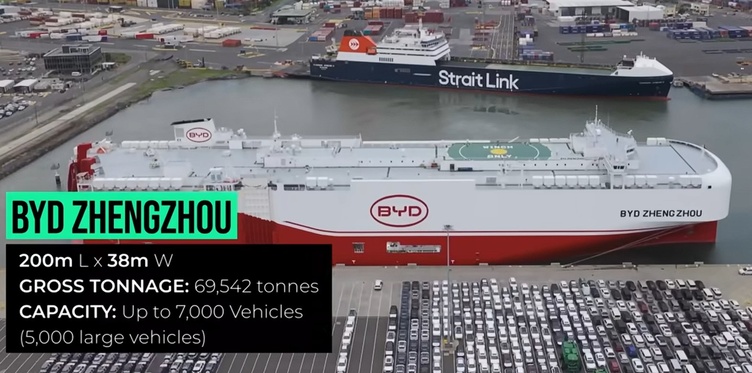
On Sunday, a 200-metre-long ship pulled into Port Melbourne carrying 4,809 cars.
The vessel was the BYD Zhengzhou. It belongs to BYD, the Chinese carmaker, and is one of eight purpose-built carriers the company owns outright — a rarity among carmakers.
And it has arrived at our shores with the single largest shipment of EVs in our history.
For a company barely known to Aussie consumers a few years ago, BYD is now the second-most-popular brand for new cars. BYD said roughly 75% of the vehicles onboard were already sold and allocated to customers.
The BYD Zhengzhou normally runs cars to South America. It came here instead, after demand for electric vehicles in Australia spiked in March.
Source: BeyondEV
BYD’s local chief, Stephen Collins, was blunt about the cause. The oil crisis in the Middle East drove the rush. That’s the larger half of the story; the other is tax incentives from the government, but I’ll leave that for another time.
We have written plenty about the Strait of Hormuz here at Fat Tail. Now we’re watching its consequences arrive on a boat.
The Hormuz effect reaches the driveway
When the war in Iran began in February, fuel supplies became uncertain, and prices with them. Australians responded the way drivers across the world did.
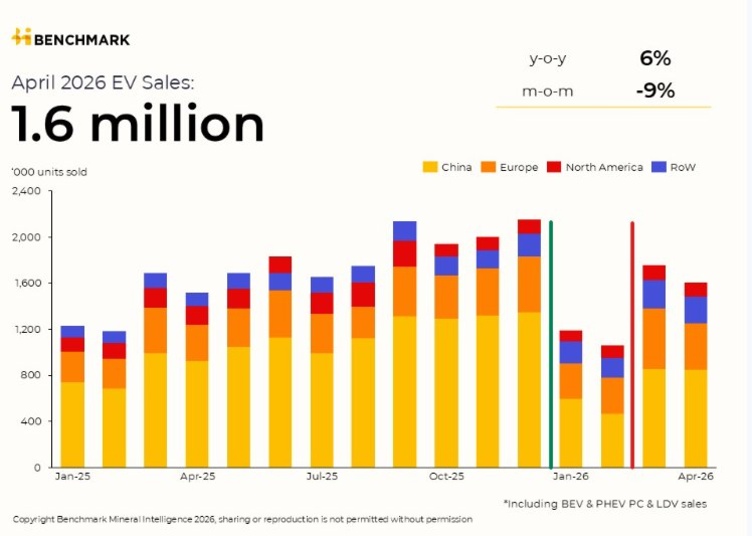
Below are the recent figures for EV sales. I’ve included a green line marking where China’s domestic demand subsidies were reduced, and a red line for the post-Iran crisis world.
Source: Benchmark Mineral Intelligence (lines added)
[Click to open in a new window]
Closer to home, NRMA Insurance says quotes for EV cover have roughly doubled this year. Pickles, the country’s largest car auction site, logged a 163% jump in EV searches in March.
Sales figures tell the same story. Tesla sold 6,433 cars here in May, its best month on record, up 66% year over year.
The old guard slipped at the same time. Hilux sales fell 31% against last April, and the Ford Everest dropped more than 29% as diesel prices bit.
The trigger was plainly energy security, felt at the bowser. With volatile fuel prices and the fuel excise discount due to end soon, a charged battery starts to look like independence.
The driver reaching for an EV is trying — knowingly or not — to step off the Hormuz supply chain.
But stepping off one supply chain means stepping onto another.
A supply chain on wheels
Here’s what sets BYD apart from Toyota or Ford. It does not simply assemble cars. It mines the lithium. It builds the batteries and the subcomponents. It makes the vehicles — and now it ships them too.
Supply chains run from the mines of Henan Province to the Melbourne dock, with one company holding every link along the way.
That integration is why BYD could answer our demand spike within weeks. Local executives flagged the surge, and approval for extra production and shipping came back almost at once.
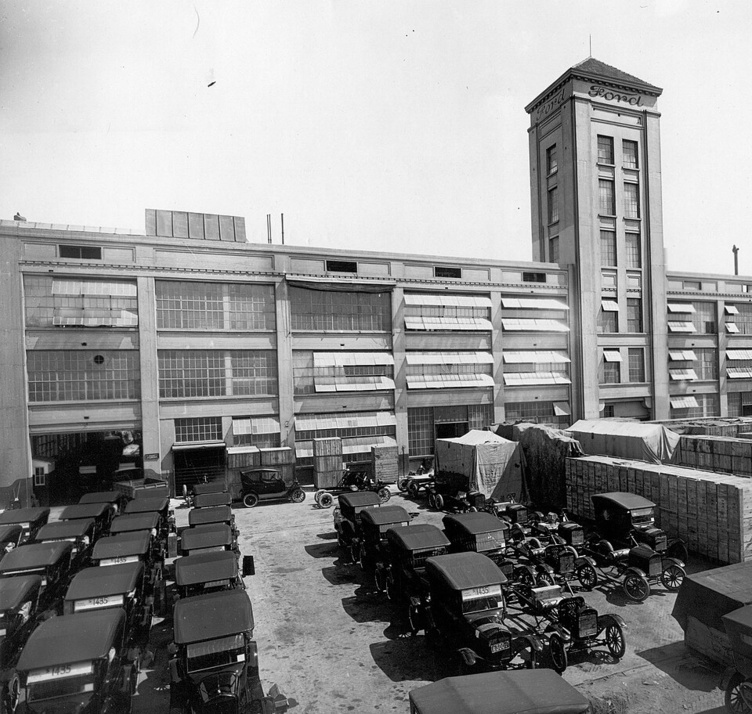
In China, it has built mammoth supply chains and assembly lines on a scale the world hasn’t seen since Ford’s first moving production line.
Back in 1913, when Ford cut the assembly time of chassis from 12 ½ hours to 2 ½ hours, the motoring world changed.
Source: La Nación Newspaper
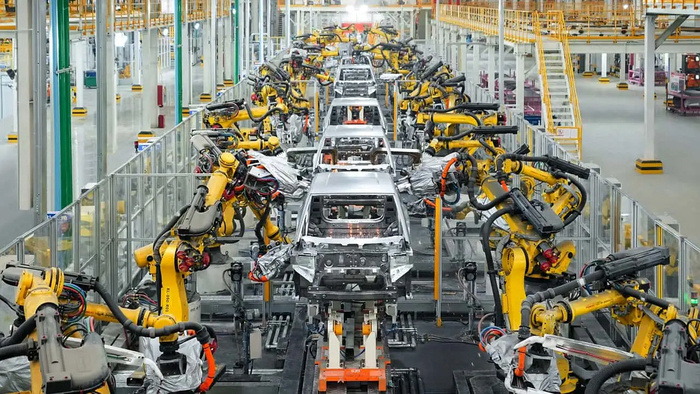
Now, BYD’s mega-factories churn at a scale even Ford himself couldn’t have believed.
A new battery every three seconds. A new EV off the line every 51 seconds. With an 98% automation rate, plants run at near-full capacity 24 hours a day.
That means two cars have been built in the time it’s taken you to read this far — and two more will be done by the time you finish.
Source: BYD- Zhengzhou Plant
As a carless city slicker these days, I talk to a lot of Uber drivers about their latest ride. Many report that BYD’s cars are surprisingly good. The 120,000 already sold here would probably say so.
The harder question is what we are buying into.
The Great Race, in physical form
Regular readers may have heard James Cooper’s recent thesis on what he calls the Great Race. The world is shifting from one dominant power to many rivals.
That shift has set off a scramble for resources, a contest to control critical supply chains, and a race for the technologies that come next.
The BYD Zhengzhou is that thesis wearing a new coat of paint.
China’s hold on critical minerals is the same hold that produced this ship’s cargo. Rare earths, lithium, and the plants that process them sit largely inside Chinese borders or Chinese-owned operations abroad.
Beijing has already shown it will use that leverage, with export controls on rare earths that have sent allied capitals scrambling.
So Australia faces a quiet swap. We are turning away from oil that arrives through a contested strait, and towards cars built on minerals that flow through Beijing.
The dependence does not vanish. It simply changes address.
That is the core of the Great Race. The contest is no longer only about barrels moving through Hormuz. It is about who controls the inputs to everything meant to replace those barrels.
China’s electric fleet alone displaced around a million barrels of oil a day last year, a figure set to climb toward 2.7 million by 2030.
Every car that rolls off the Zhengzhou assembly line subtracts from oil demand and adds to mineral demand.
What makes this interesting is that Australia sits on both sides of this trade.
We dig much of the raw material that the energy shift depends on — both supplying China and feeding the new race to secure it elsewhere.
And as friend-shoring gathers pace, Western buyers will likely pay a premium for supply that does not run through a rival.
Meanwhile, our energy producers on the other side aren’t going away anytime soon, and they’ll stay central to plenty of other themes likely to dominate the next decade.
But things are shifting…
The real lesson the BYD ship carries has little to do with cars. It’s that resource scarcity does not end when you plug in. It moves upstream — into the minerals and the refining capacity, where the contest is now being fought in earnest.
A 200-metre ship has made that contest visible in Melbourne. The race for what powers the next economy is already underway, and Australia holds a strong hand.
The trick will be playing it before the rest of the table looks up.
To see what you need to secure before the great race begins, click here to learn more from geology expert James Cooper.
Regards,

Charlie Ormond,
ATLAS and Altucher’s Investment Network Australia




Comments