


Yesterday, the US and Iran agreed to a two-week ceasefire.
Iran will allow ships through the Strait of Hormuz. And Trump won’t bomb certain civilisations back to the Stone Age. Markets rallied.
And yet here we are.
Israel continues its role as provocateur with a massive barrage into Lebanon overnight. While Iran struck the Saudi’s key alternate pipeline after the bell.
So far, the ceasefire looks fragile.
But listening to Trump’s recent rhetoric, you’ll hear a common refrain. Mission complete. I’m ready to pull back.
‘This will be a double-sided CEASEFIRE!’ he posted. ‘The reason for doing so is that we have already met and exceeded all Military objectives, and are very far along with a definitive Agreement concerning Longterm PEACE with Iran, and PEACE in the Middle East.’
Peace or no, the focus remains the Strait of Hormuz. After an anaemic March, things are starting to bite.
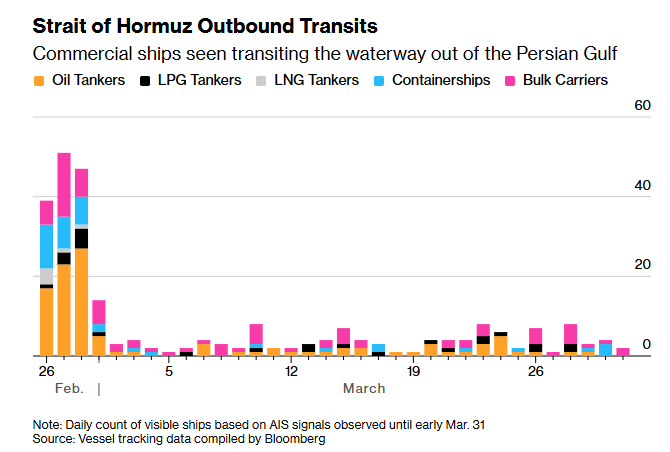
Source: Bloomberg
[Click to open in a new window]
The consensus among energy experts is that mid-April is crunch time for oil shortages. Existing inventories will soon be stretched in many nations.
Yesterday, the market pinned its hopes of redemption on an open Strait.
But if you read the fine print, you’ll see Iran’s Foreign Minister didn’t promise free passage. He promised safe passage ‘via coordination with Iran’s Armed Forces.’
In other words, it’s going to cost you.
This doesn’t look like a country preparing to hand back the keys. It looks like a country building a toll booth. One that could be with us for decades, if not longer.
And if that sounds far-fetched, it shouldn’t. Because history is replete with lessons.
A Toll that Built a Kingdom
The obvious one is the Suez Canal, an energy and trade highway that generates US$9 billion in annual revenue for Egypt.
But there are others that I want to explore today.
In the 15th century, Denmark controlled both sides of the Øresund Strait, the narrow passage connecting the North Sea to the Baltic.
Every ship carrying grain, timber, or metal between Russia, Sweden, and Amsterdam had to pass through it.
King Erik of Pomerania saw the opportunity. He fortified the strait, built a customs house at Helsingør (top right of image below), and taxed every vessel under threat of cannon fire.
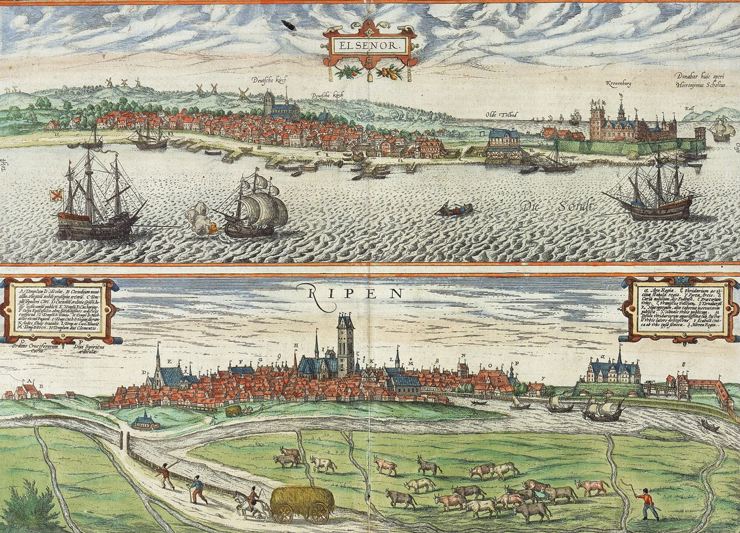
Source: Kronborg.dk
[Click to open in a new window]
At its peak, the Sound Dues were nearly half the Danish crown’s income.
One historian I read described it as ‘400 years of legal piracy’.
But the real power wasn’t just revenue. Danish clerks interrogated captains, inspected cargo manifests, and logged every transit.
Denmark knew more about Baltic trade flows than any other nation in Europe. Revenue and intelligence, from a single chokepoint.
Successive kings continued to build up the fortification, culminating in the beautiful Kronborg Castle (the setting of Shakespeare’s play Hamlet).
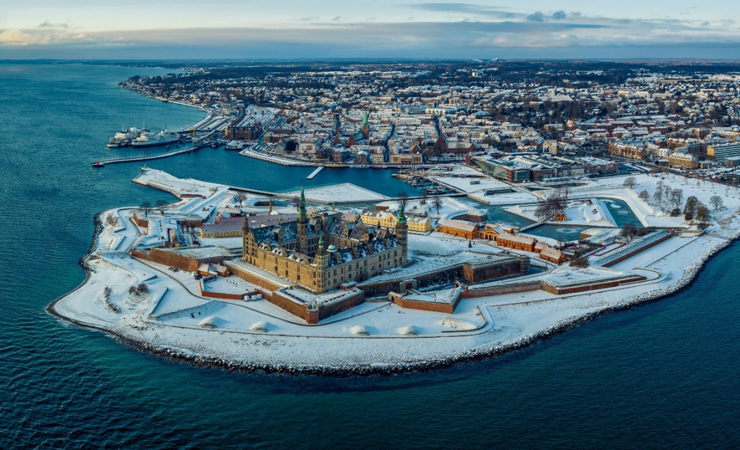
Source: Kronborg.dk
The toll system spanned from 1429 to 1857, only ending after Britain, Russia, and the United States paid Denmark a lump sum to stop.
Even then, Denmark retained its sovereignty, forts, and navigation rules.
The Ottoman Bosporus
Turkey tells the same story with a different ending. Or rather, no ending at all.
After conquering Constantinople in 1453, the Ottoman Empire controlled the Bosporus for four centuries.
It was the only passage between the Black Sea and the Mediterranean. The Ottomans treated the Black Sea as a private lake and barred foreign warships.

Source: Istanbularihi.ist
Access was doled out through treaties. With each one granting limited rights to specific nations in exchange for political concessions.
Early on, Venice was forced to give up territory and pay hefty fees to continue its trade.
France was pitted against other European powers in the ‘sacrilegious union of the lily and the crescent’ that split Christendom through the 17th century.
And in the 1840s, Turkey closed the strait to all warships except those of the Sultan’s allies.
The pattern was consistent. The Ottomans used the Bosporus to split alliances, reward friends, and punish rivals.
Access was never a right. It was a favour, granted on terms that served Istanbul.
Even after the empire collapsed, Turkey retained control. And today, Ankara still collects transit fees.
It hiked those fees fivefold in 2022, raising annual revenue from around US$40 million to US$200 million.
Nearly 600 years later, the chokepoint still pays.
Iran’s Hormuz Playbook
The parallels with Iran’s plans should be obvious. But that doesn’t mean we won’t have options.
Further alternative pipelines like the Saudi’s East-West (which was struck yesterday) are already being floated by Gulf states.
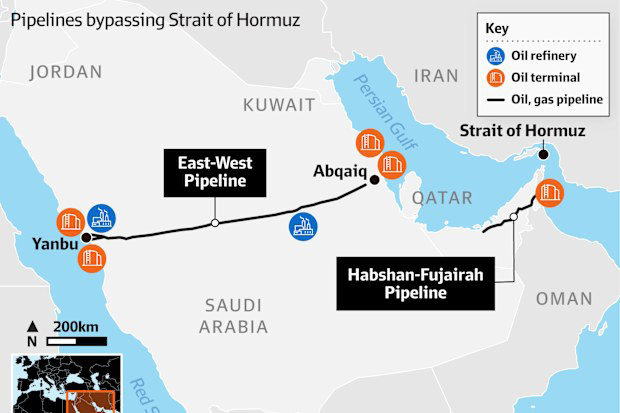
Source: Reuters
Taxation always incentivises workarounds. But what would those costs likely be?
Here’s a rough estimate based on Suez fees.
At around US$400,000 per vessel, the roughly 30,000 vessels crossing the Strait each year would mean roughly US$1 billion per month in revenue for Iran.
US$12 billion is more than Iran’s annual military budget and roughly a quarter of the government’s annual revenues.
What will be sold to the international audience as a tool for reparations will be the very thing that rebuilds this problem for future leaders.
Like Denmark, Iran will convert a geographic bottleneck into a revenue stream and an intelligence tool.
Like the Ottomans, it will likely dole out selective access to divide potential opponents.
Gulf states that need the strait open are forced to weigh their relationship with Washington against the practical reality of keeping trade flowing.
Cooperation is rewarded. Resistance is punished.
Meaning if Iran establishes even a partial toll or managed-access regime on Hormuz, the implications for energy markets are structural, not cyclical.
Around 20% of the world’s oil passes through the Strait. A permanent friction cost on that transit would put a floor under energy prices that no amount of US shale production can offset.
Markets continue to price this as a temporary disruption. That could be a mistake.
Denmark held the Øresund for 400 years. Turkey still collects on the Bosporus after 600. The Suez is a huge money maker for Egypt.
The idea that Iran will simply hand Hormuz back for free looks naïve in the gaze of history.
Regards,

Charlie Ormond,
Small-Cap Systems and Altucher’s Investment Network Australia




Comments