



Leo Lithium [ASX:LLL] made a bold return to the ASX after enduring a challenging period of voluntary suspension.
However, the welcome was far from warm, as the company’s shares plummeted by 50% to 56 cents this afternoon, reflecting the turbulence surrounding the company.
The plunge was triggered by ongoing issues at Leo Lithium’s flagship Goulamina Lithium Project in Mali.
The resumption of trading comes after the company suspended trading near the end of July after Mali’s government sent a directive to suspend Direct Shipped Ore (DSO) activities from the project.
The resumption today came with an announcement by the company assuring shareholders that the project remains on schedule and that it continues to have strong support from its strategic partner, Ganfeng Lithium.
Shares in Leo Lithium remain up by 4.67% in the past 12 months despite today’s collapse, as investors pin their hopes on the development of West Africa’s first operating lithium mine, hosting a massive hard rock deposit.

Source: TradingView
Lions and tigers and bears, oh my
Bearish sentiment has eclipsed the potential of the Goulamina Project and Leo Lithium’s prospects today, with the share price taking a 50% hit as its troubles mount after weeks of a voluntary trading suspension.
The company’s shares have been under pressure due to several headaches, including:
- A directive from Mali’s Ministry of Mines to suspend the direct shipped ore (DSO) component of activities at the Goulamina Lithium Project.
- Tax issues related to the project.
- Concerns about the company’s association with its old parent company, Firefinch [ASX:FFX].
- The introduction of a new mining code in Mali by interim President Assimi Goita.
At the heart of Leo Lithium’s current woes is a directive from Mali’s Ministry of Mines to suspend the direct shipped ore (DSO) component of their activities at the Goulamina Project.
Leo Lithium had been targeting 185,000 tonnes per year of DSO exports until spodumene production commenced.
This directive has left the company in a state of uncertainty, as no clear reason has been provided for the suspension.
Leo Lithium says it made efforts to communicate the importance of DSO operations and its potential benefits to Mali to the government. Still, as of now, no formal response has been received.
While this directive may impact the company’s plans, Managing Director Siman Hay emphasised that DSO operations were not considered essential for the project’s success in their feasibility studies.
Another significant issue affecting Leo Lithium relates to tax matters. The company’s Goulamina Project is operated through a joint venture with Ganfeng Lithium, holding a 50% stake in Mali Lithium BV.
According to agreements, MLBV should be exempt from duties and taxes on certain aspects of its operations.
However, Leo Lithium claims the Mali government has not honoured the agreement.
The company has already paid substantial import duties and taxes, with an additional potential burden of up to $24.94 million in the current quarter if the issue remains unresolved.
This dispute, if unresolved, could result in a total estimated exposure ranging from $69–77 million.
Adding to the list of overarching concerns for Leo Lithium and other mining companies operating in Mali is the introduction of a new mining code by Mali’s interim President, Assimi Goita.
The specifics of how this code will impact existing projects are yet to be determined, pending the release of implementing decrees, but analysts are concerned it could significantly increase costs.
Leo Lithium has also faced questions regarding its association with Firefinch, from which it was spun out in early 2022.
The company has clarified that it has no intention of future involvement with Firefinch and that it has presented evidence to the Mali Commission.
Outlook for Leo Lithium
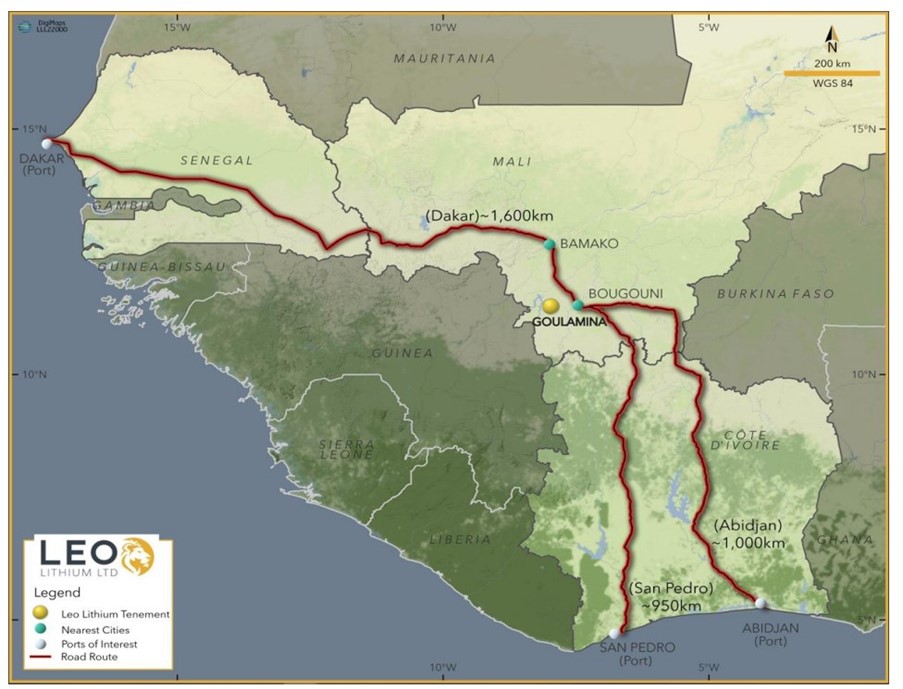
Despite these challenges, Leo Lithium has made progress in its larger strategic plans. It finalised a cooperation agreement with Ganfeng on 3 September, outlining a range of long-term strategic benefits.
These include raising the proposed Stage 2 capacity to 500,000 tonnes per year and increasing Goulamina’s overall capacity to 1 million tonnes per year.
Source: Leo Lithium
The potential for co-investment in a downstream conversion facility in Europe or another nearby region is also being considered.
Despite the hurdles, Leo Lithium remains optimistic about the progress of construction and mining activities, emphasising that delays caused by customs duties are recoverable.
The project was estimated to be approximately 35% complete by the end of July, with plans for accelerated development in the coming months.
Overall, Leo Lithium’s return to the ASX has been marked by turbulence, but it also brings opportunities for growth and strategic collaboration with Ganfeng.
The company’s ability to navigate the challenges in Mali and leverage its partnership may ultimately determine its future success in the sector. Investors and shareholders will closely watch how Leo Lithium manages these complexities in the coming months.
For now, the company remains a high-risk play that could benefit those willing to stomach the challenges of operating in the region.
Some believe the risks could be somewhat mitigated as the electric vehicle (EV) market pushes lithium demand up.
But another mineral is essential for EVs and our energy transition.
Other net zero metals worth your time
Stopping climate change will require trillions and a global supply of critical minerals — one special metal from this range is copper.
This means that we’re going to need a lot of red metal, and more exploration will be required to restock supplies.
If you subscribe to Fat Tail Commodities, you will have access to resources expert James Cooper’s most recent thoughts on the subject.
James will give you a wealth of investment ideas and veteran insights for the copper industry.
He’ll also explain the copper supply crisis and how you can position yourself to take advantage of incoming changes in the industry.
Find out more about the coming red draught and click here today.
Regards,
Fat Tail Commodities



Comments