



When you think of AI, most picture a blinking line waiting for text.
A genie of answers: you type a question, and a large language model (LLM) answers it one word at a time.
That technology has driven markets for nearly four years. But some of the most exciting work in AI today looks nothing like ChatGPT.
Researchers are redesigning how machines think and write from the ground up.
Some are even building models that think only in terms of DNA and are already designing new viruses and drugs.
Let’s take a whirlwind tour of what that AI future could look like.
The first stop is Stanford’s labs.
An AI That Speaks DNA
In August, researchers at Stanford and the Arc Institute published a landmark paper in the journal Science.
They had used AI to write the complete genetic code for a virus not seen in nature, then built it in the lab.
The virus is a bacteriophage, a type of virus that only infects bacteria. When the team released their AI-designed phages into a dish of E. coli, the bacteria died.
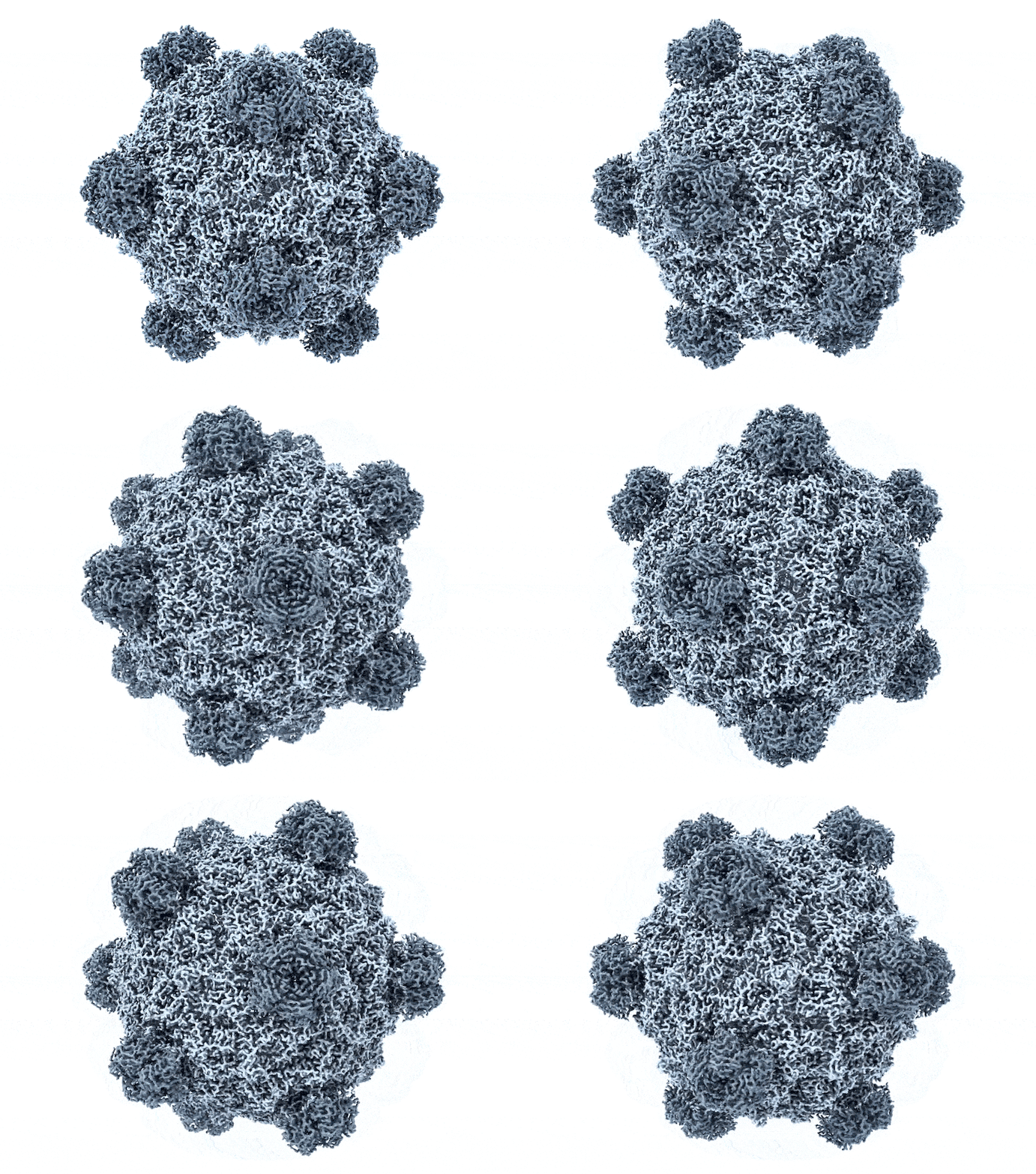
Source: New York Times
The model behind it is called Evo. It uses the same underlying design as ChatGPT (using transformers, the T of GPT), but it has never seen a word of human language.
Instead, it learned from trillions of DNA letters drawn from across the tree of life.
Where an AI chatbot (LLM) predicts the next word, Evo predicts the next letter of genetic code.
That may not seem like a big deal, but remember that a text model is somewhat limited to what humans have already written down.
A DNA model instead learns from billions of years of evolution. And every living thing on Earth, from bacteria to blue whales, runs on the same four-letter code.
Teach an AI the building blocks of life and the applications are endless:
- DNA as data storage and compute: execute programs within cells
- Organoid Intelligence: using human brain cells to create cellular computers
- Fungi as our communication networks within completely synthetic robots
- Bacteria as the workhorse of the future: making fuel, breaking down waste, extracting resources
One could imagine AI running within a cell floating inside your body. It could work like an extra immune system, designing and producing new vaccines to respond to your latest infection or destroy cancer cells.
This may all sound pure sci-fi, but we’re already well on our way. We already have neurons capable of playing Pong.
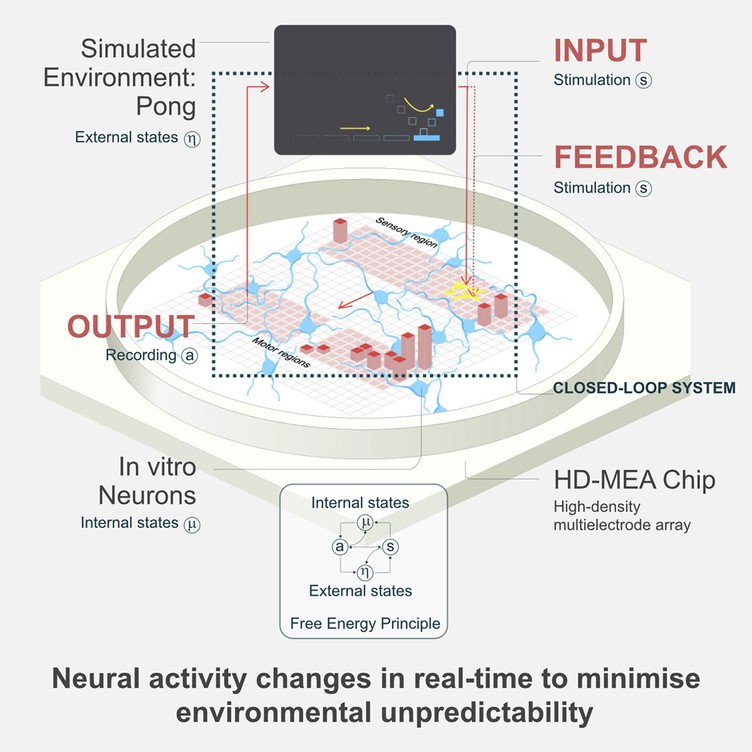
Source: Kagan B, Kitchen A, Tran N, et al. Neuron, 2022; 110
As Adrian Woolfson, co-founder of bio-startup Genyro put it:
‘Biology is now computable, predictable, and therefore designable.’
That doesn’t mean it’s coming tomorrow. Ethical and safety concerns will naturally mean the space is rightly paced. The practical appeal for today is in medicine.
Phages could become precise weapons against drug-resistant superbugs. The researchers’ next goal is longer stretches of DNA, the kind bacteria use to build drugs like penicillin.
From Molecule to Medicine
The same shift is changing how drugs are found.
Hong Kong-listed Insilico Medicine was one of the first firms to use AI to both pick a disease target and design the molecule to hit it.
Its lung fibrosis drug reached candidate status in about 18 months, compared with the usual 4.5 years. In July, it entered a 320-patient Phase III trial in China.
Big Pharma is following. Eli Lilly is building a supercomputer with Nvidia to speed up drug discovery, and AstraZeneca says over 90% of its small-molecule discovery work is now AI-assisted.
The early numbers look good. A 2024 study found AI-discovered drugs passed early safety trials 80 to 90% of the time. The historical norm is roughly 40 to 65%.
The big caveat is that in Phase II, where a drug must show it actually works, success rates fell back to the standard 40% pass.
So, AI is getting very good at designing molecules that clear early safety checks.
But proving they treat disease is still the hard and costly part, and that’s where the bigger prize lies.
A New Way to Write
Even language AI is being rethought. Every major chatbot writes one token at a time, from left to right, so each word has to wait for the one before it.
This month, Stanford’s Hazy Research lab released a different approach called Next-Concept Modeling, or NCM.
Unlike LLMs, an NCM maps the whole response in rough form first, then fills in the detail over a handful of passes.
You can think of it as how a person starts a drawing: first with a sketch outline, then filling in the details as they progress. 
Source: Claude AI-generated explainer
[Click to open in a new window]
By reducing the number of steps, the system could be many times more efficient than current AI architectures.
It’s also not locked into a rigid form of thinking, allowing big concepts to distil rather than following a fixed path.
The big caveat with this model is that nobody has shown the approach works at large scales yet.
Still, if it works and text can be produced in far fewer steps, the cost of running AI could fall significantly.
That counts for a lot in an industry spending hundreds of billions on chips and data centres.
Spotting the Shift Early
None of this technology is moving markets today. But AI is certainly the theme that is dominating our headlines and markets.
Which brings me to a reminder.
The half-price offer on ATLAS 1.0 closes at midnight tonight.
ATLAS is the system we’ve built to monitor ASX small- and mid-cap stocks.
When money starts flowing into a theme like AI biotech or critical minerals, price momentum often appears before the headlines catch up.
ATLAS is designed to help you spot that shift early, and to flag when it starts to fade.
If you haven’t seen the full presentation yet, you can watch the ATLAS 1.0 video here.
If you’ve been on the fence until now, this is your last chance.
At midnight tonight, the half-price offer ends and the order page comes down.
Claim your half-price ATLAS 1.0 access here before it closes.
Regards,

Charlie Ormond,
ATLAS and Altucher’s Investment Network Australia
PS: A year from now, the market will look very different. The question is whether you’ll have been watching it change. The ATLAS 1.0 half-price offer closes midnight TONIGHT. Last chance to grab it here.




Comments