• Skip to primary navigation
  • Skip to main content
  • Skip to primary sidebar
  • Skip to footer
  • Home
  • Latest
  • Videos
  • Series
  • E-Newsletters
  • Categories
    • Commodities
    • Macro
    • Market Analysis
    • Small Caps
    • Technology
  • Investment Guides
  • Premium Services
  • Editors
  • About
  • Contact Us
  • Subscribe
Fat Tail Daily
Subscribe
  • Home
  • Latest
  • Videos
  • E-Newsletters
  • Premium Services
Latest

How Resources and the Green Revolution Collide — The Metals to Watch

Like 0

By Lachlann Tierney, Monday, 14 September 2020

A collision point like no other, a heap of cheap money, the prospect of negative rates, and technology waiting to pick at the carcass of the traditional banking system. So what metals have the most exposure to the green revolution?

A collision point like no other, a heap of cheap money, the prospect of negative rates, and technology waiting to pick at the carcass of the traditional banking system.

Everyone knows strange things are afoot.

But today I’m going to suggest that certain unheralded resources with exposure to the green revolution could be the investment theme of the next decade.

Again, I think Australia has little option but to dig its way out of the current mire we are in.

To make my point, I want to cast your memory back to the good old days of Australian mining.

How to buy into the NEXT battery boom (free report)

RBA chief on Australia’s last mining boom — a sign of what’s to come

And I call upon an old Philip Lowe paper, published in 2011, prior to his ascension to the RBA throne:

‘At the start of the 2000s Australia was derided by some for being an “old economy”. It lacked a substantial information and communications technology sector and was seen to be overly dependent on the extraction of resources, an activity that was not going to be enriching due to the declining relative value of commodities and weak potential productivity gains. However, by the end of the 2000s Australia was once again seen as the Lucky Country, riding on the back of rapidly rising commodity prices and having experienced only mild downturns at the time of the two international recessions that bookended the decade. Overall, it was indeed another prosperous decade; the unemployment rate fell and incomes rose strongly. The 2000s was the first decade since Federation in which the annual growth rate of real GDP in Australia remained positive throughout the decade.’

He continues in the same paper:

‘The increase in the size of the mining sector is likely to make the Australian economy, and its fiscal position, more cyclical. Commodity prices are inherently more volatile than prices of services or manufactured goods because supply is typically less elastic in the short run and demand more sensitive to economic cycles. In addition, historically, the difficulty in forecasting commodity demand and prices, particularly at the long horizons of resource investment projects, has often led to over-investment and “hog cycles”.’

And it appears we are at a low ebb in the cycle.

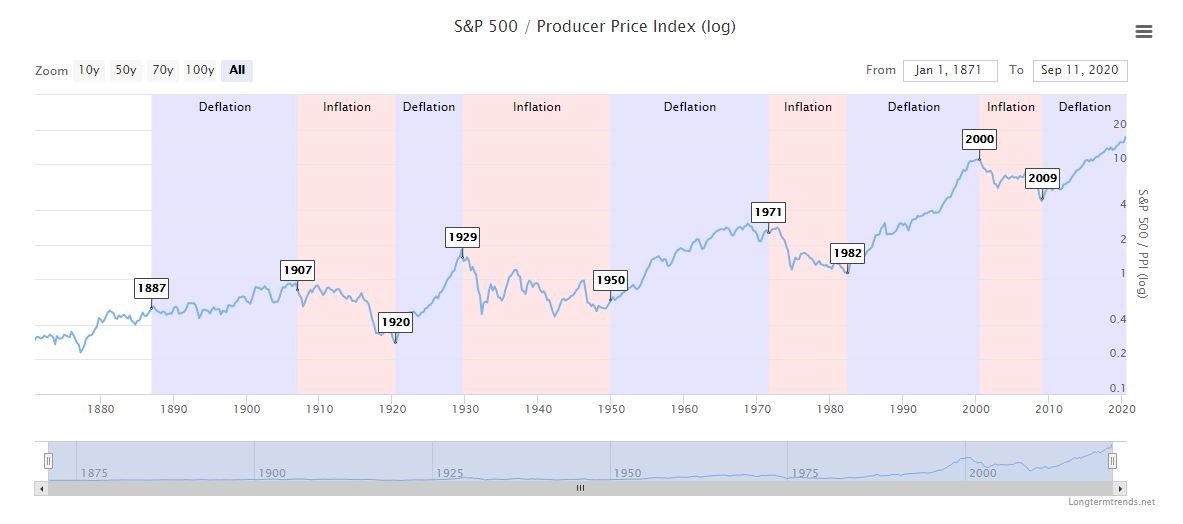
For reference, I draw your attention once more to the stocks-to-commodities ratio:


Port Phillip Publishing

Source: longtermtrends.net

[Click to open in a new window]

The ratio is at its highest point in more than 100 years.

The purple channels are called deflationary periods and the pink channels are inflationary periods.

We know the US Federal Reserve is now happy to let inflation run ‘hot’.

Commodities have a long history as a hedge on inflation too.

Inflation and resources shaping up for a big combo

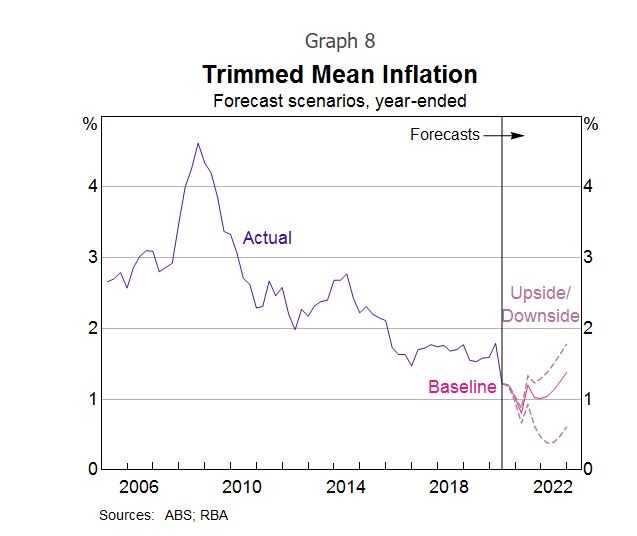
But what does the RBA forecast?


Port Phillip Publishing

Source: RBA

[Click to open in a new window]

A sharp uptick back to 2% or 1.5% in the first two scenarios over the next two years.

It could keep going from there if they don’t keep a lid on it.

However, inflation in the US is potentially the real driver here.

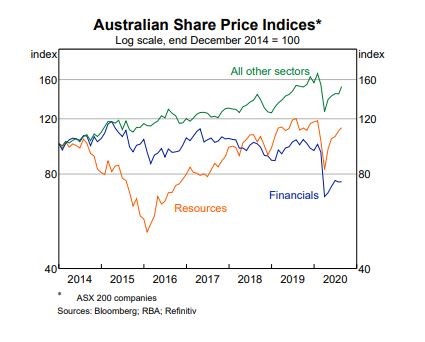
Having previously drawn attention to the fact that the ASX Resources Index [XJR] is outperforming the ASX Banks Index [XBK], how are resources doing in the long run?

This from the RBA:


Port Phillip Publishing

Source: RBA

[Click to open in a new window]

That’s still comparatively cheap, relative to all other sectors.

We will see how the story develops over the next six months, but now is a great time to be looking at resources.

Which brings me to my next point.

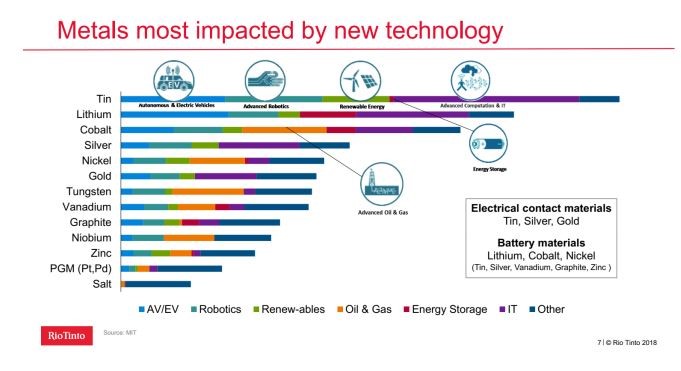
What metals have the most exposure to the green revolution?

We’ve covered nickel and copper, but check out this relatively unknown metal:


Port Phillip Publishing

Source: stellarresources.com.au

[Click to open in a new window]

Now this chart is from 2018, but it’s surprising to see tin up there.

And we all know about lithium and cobalt for battery tech, but silver is worth a mention as well.

Silver is usually thought of as a precious metal, but it’s actually more of an industrial or tech metal now.

Particularly in the photovoltaic cells in solar panels.

Which type of resources companies offer the most compelling case for investment in this green revolution?

You have producers, developers, and explorers.

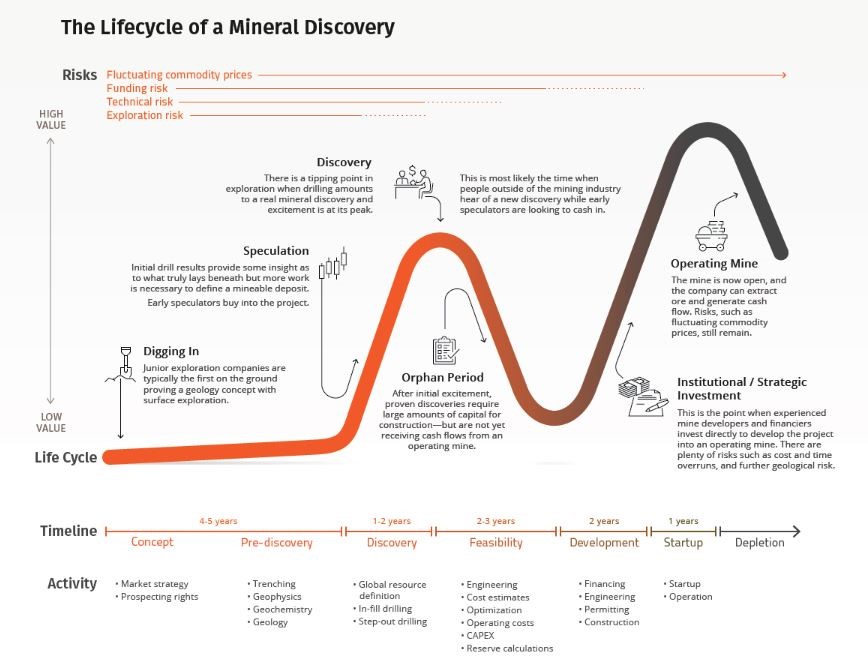
I think the biggest value could lie in companies that are in the ‘trough’ on this chart:


Port Phillip Publishing

Source: visualcapitalist.com

[Click to open in a new window]

Companies that are about to exit that ‘orphan period’ and on the cusp of institutional/strategic investment.

If you can pick the right ones, then that’s where the real exponential potential lies.

So, if all this intrigues you, check out our free report on the commodities ‘supercell’ we think is forming right before our eyes.

It’s a great read and has more information on what we are looking for over the next few months in Exponential Stock Investor.

Regards,

Lachlann Tierney Signature

Lachlann Tierney,
For Money Morning

PS: Our publication Money Morning is a fantastic place to start on your investment journey. We talk about the big trends driving the most innovative stocks on the ASX. Learn all about it here.


All advice is general advice and has not taken into account your personal circumstances.

Please seek independent financial advice regarding your own situation, or if in doubt about the suitability of an investment.

Comments

Subscribe
Notify of
guest
guest
0 Comments
Inline Feedbacks
View all comments
Lachlann Tierney
Lachlann ‘Lachy’ Tierney is passionate about uncovering hidden opportunities in the microcap sector. With four years of experience as a senior equities analyst at one of Australia’s leading microcap firms, he has built a reputation for rigorous research, deep-dive due diligence, and accessible investor communications. Over this time, he has vetted seed, pre-IPO and ASX-listed companies across sectors, conducted onsite visits, and built strong relationships across the microcap space. Lachy is nearing completion of a PhD in economics at RMIT University, where his research focuses on blockchain governance and voting systems. His work was housed within the Blockchain Innovation Hub at RMIT, a leading research centre for crypto-economics and blockchain research. He holds a Master’s degree from the London School of Economics and an Honours BA in Philosophy and Politics from the University of Melbourne. Born in New York and raised in California, Lachy grew up a few blocks from biotech giant Amgen and counts among his peers various characters in the overlapping worlds of venture capital, technology and crypto. When he’s not researching microcaps, he’s most likely sweating it out in a sauna or dunking himself in cold Tasmanian water.

Lachlann’s Premium Subscriptions

Publication logo
Australian Small-Cap Investigator
Publication logo
Fat Tail Microcaps
Publication logo
James Altucher’s Early-Stage Crypto Investor Australia

Latest Articles

  • Don’t Watch The Strait, Read This
    By Lachlann Tierney

    Iran’s oil shock is squeezing markets while AI devours electricity, pushing capital toward one overlooked winner: baseload nuclear and uranium plays

  • Markets Celebrating Like the War is Over. Except it isn’t.
    By James Cooper

    Markets are rallying — but don’t be fooled. One critical support level suggests the oil crisis has further to run.

  • Here we go
    By Lachlann Tierney

    Trump's Iran ultimatum expires at our ASX market open tomorrow. Here's why the energy trade is only getting started. Think phases and always be prepared.

Primary Sidebar

Latest Articles

  • Don’t Watch The Strait, Read This
  • Markets Celebrating Like the War is Over. Except it isn’t.
  • Here we go
  • Nuclear is the last great power standing
  • Easter Monday, energy chaos, and an even bigger lithium rebound!?

Footer

Fat Tail Daily Logo
YouTube
Facebook
x (formally twitter)
LinkedIn

About

Investment ideas from the edge of the bell curve.

Go beyond conventional investing strategies with unique ideas and actionable opportunities. Our expert editors deliver conviction-led insights to guide your financial journey.

Quick Links

Subscribe

About

FAQ

Terms and Conditions

Financial Services Guide

Privacy Policy

Get in Touch

Contact Us

Email: support@fattail.com.au

Phone: 1300 667 481

All advice is general in nature and has not taken into account your personal circumstances. Please seek independent financial advice regarding your own situation, or if in doubt about the suitability of an investment.

The value of any investment and the income derived from it can go down as well as up. Never invest more than you can afford to lose and keep in mind the ultimate risk is that you can lose whatever you’ve invested. While useful for detecting patterns, the past is not a guide to future performance. Some figures contained in our reports are forecasts and may not be a reliable indicator of future results. Any actual or potential gains in these reports may not include taxes, brokerage commissions, or associated fees.

Fat Tail Logo

Fat Tail Daily is brought to you by the team at Fat Tail Investment Research

Copyright © 2026 Fat Tail Daily | ACN: 117 765 009 / ABN: 33 117 765 009 / ASFL: 323 988