



On Monday night, Ukraine sent more than 600 drones towards Moscow.
Two nights earlier, the count was 822.
These were among the heaviest drone waves of the four-year war. Warehouses burned in the Russian capital, while Urals crude and diesel shipments fell to their lowest levels since May.
It’s not just one way. In Kyiv, residents are sleeping in metro stations again.
Numbers here will do little to help us understand the daily plight. Instead, below is what a day in July looked like for Ukrainians facing the barrage of drones (in yellow) and larger missiles in red.
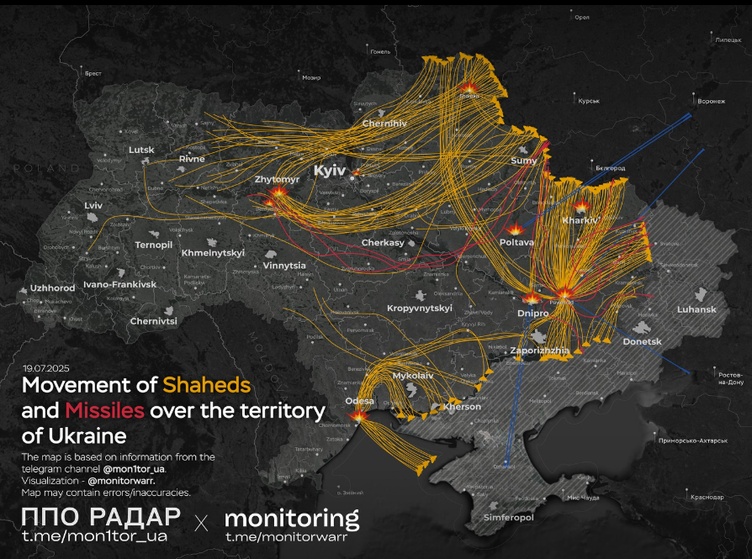
Source: Monitorwarr 19/07/26
[Click to open in a new window]
While the Iranian-designed Shahed drones look dramatic on this map, only 10–13% of them find their target. Much of that has been down to the ingenuity of the Ukrainian people.
However, the threat to the Ukrainian people has shifted. And the shift is signalling a deeper problem in the West.
Empty Magazines
Ukraine intercepted roughly 70% of incoming Russian ballistic missiles in March. By July that had fallen to 20%.
The air force has since stopped publishing regular figures.
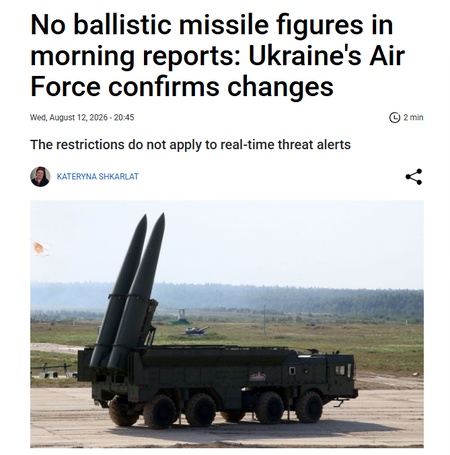
Source: RBC-Ukraine
There is a piece of military slang for this. They call it ‘going Winchester’, and it means you have run out of ammunition.
Back in March, I wrote about the cost asymmetry problem behind all this. A US$30,000 drone against a US$4 million interceptor is a losing trade, even when every shot connects.
That article was about the price of engagement in a new drone-warfare era. This one is about how many engagements are left.
The major takeaway is that the war with Iran drained Western stockpiles far faster than most expected.
The Center for Strategic and International Studies (CSIS) estimates the Pentagon fired close to two-thirds of its pre-war Patriot missile inventory.
While four-fifths of its long-range THAAD missile inventory and large shares of other interceptors are gone.
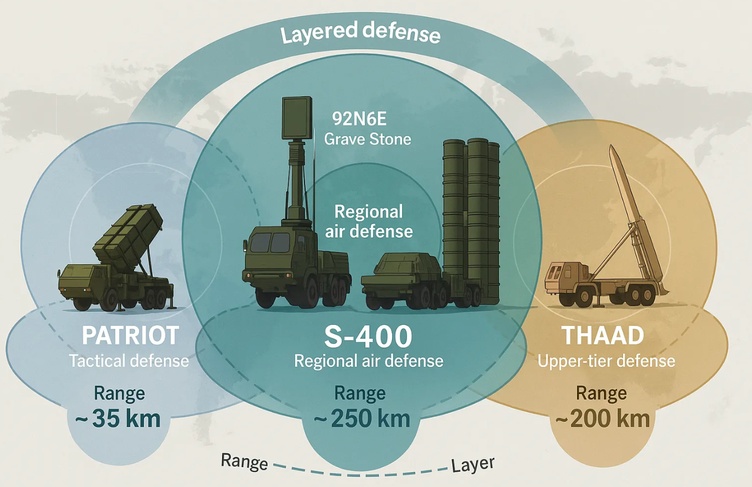
Source: Ulti-defense
On the offensive side, a third of America’s 3,000-odd Tomahawk cruise missiles have also been spent.
CSIS reckons restoring those stockpiles will take until 2029.
That also assumes Congress approves a US$1.5 trillion defence request. That looks unlikely in this political environment.
A Political Cost
The defence budget, usually a source of bipartisan support, has fractured along party lines — like much of America.

Source: Getty Images
So, with shortages already here, we’re seeing their first impact.
First in Iran, with Trump’s recent dovish pullback. That came the same weekend the Pentagon reportedly raised its inventory concerns with Trump.
Trump and Pete Hegseth have both denied there’s a shortage. Few believe them.
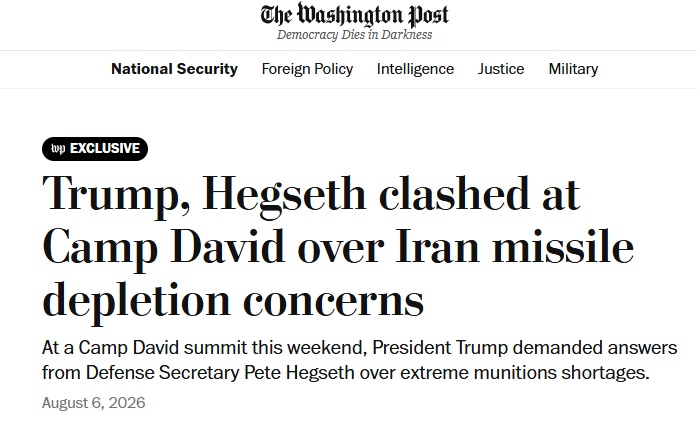
Source: Washington Post
The second impact has been on Ukraine and the wider Western Alliance, including us.
The replacement queue is long. Switzerland expects its Patriot order to slip by up to seven years. Taiwan is still waiting on 102 units ordered years ago.
Lockheed Martin has told foreign customers it cannot guarantee delivery dates because the Pentagon can (and is) diverting production at will.
We sit in that same queue. Our recent Tomahawk purchases have were called ‘performative procurement’ by opposition members. They look good on paper but aren’t coming anytime soon.
‘If those missiles arrive before 2030, I’ll walk buck naked up Northbourne Ave,’ was the bet from a defence industry insider last week.
Now scale this problem up.
The Heritage Foundation estimates that a conflict with China would require more than 19,000 Patriot interceptors.
By CSIS’s count, current American stocks are less than a twentieth of that.
The Money Has Moved
Washington has noticed.
As I tried to set out in my last piece, warfare is rapidly moving into the drone era. Outdated attempts to defend against this will continue to break budgets and strain supply chains.
Now, capital is flowing into new companies offering cost-effective solutions.
The Pentagon’s 2027 budget request sets aside more than US$70 billion for drones and counter-drone systems. The equivalent request a year earlier came to about US$16.5 billion.
One line stood out for me. The Defense Autonomous Warfare Group (DAWG) received US$225.9 million in 2026. For 2027, the Pentagon has asked for up to US$54.6 billion.
That is an increase of more than 24,000%.
This is a defence establishment reordering itself inside a single funding cycle.
Australia Joins the Queue
We are moving in the same direction, from further back.
April’s National Defence Strategy allocated up to $22 billion over the decade for drones and counter-drone systems.
Counter-drone accounts for up to $7 billion of that, more than double the 2024 allocation.
The first two contracts went to Australian firms. AIM Defence received $21.3 million for its Fractl laser system.
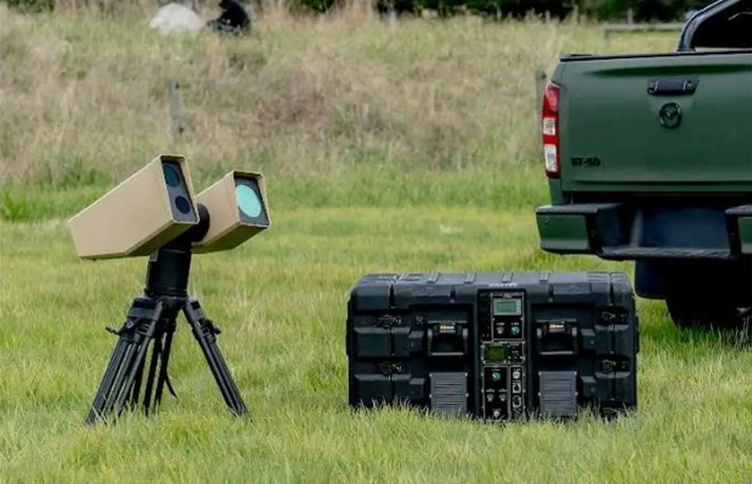
Source: AIM Defence
And SYPAQ Systems received $10.4 million for the Corvo Strike interceptor drone.
That’s $31.7 million committed against $7 billion allocated.
Meaning there’s plenty of opportunity for those ready to do some digging.
Where to Dig
Two things are worth holding onto here.
First, an allocation isn’t revenue today. Money announced in a strategy paper can take years to reach a supplier’s income statement.
The first wave of Australia’s counter-drone contracts went to privately held companies. Policy tailwinds do not always land where retail investors can reach them.
Second, the market has already priced in a good deal of enthusiasm in the space.
ASX-listed defence names saw a bull run start in mid-2025. Several names have tripled since then.
But that doesn’t mean there isn’t opportunity. The space is also highly volatile, which makes a watchlist more useful than a chase.
If I were adding exposure today, I would be more interested in detection and command systems than in the weapons themselves.
Everyone is funding the shooter. Far fewer are funding the eyes that tell it where to look.
The cost problem I wrote about in March remains unresolved. It has now become an inventory problem. Go hunting for the solution.
The theme is real, and it’s long-dated. It will continue to reward those with a bit of patience.
Regards,

Charlie Ormond,
ATLAS and Altucher’s Investment Network Australia




Comments